
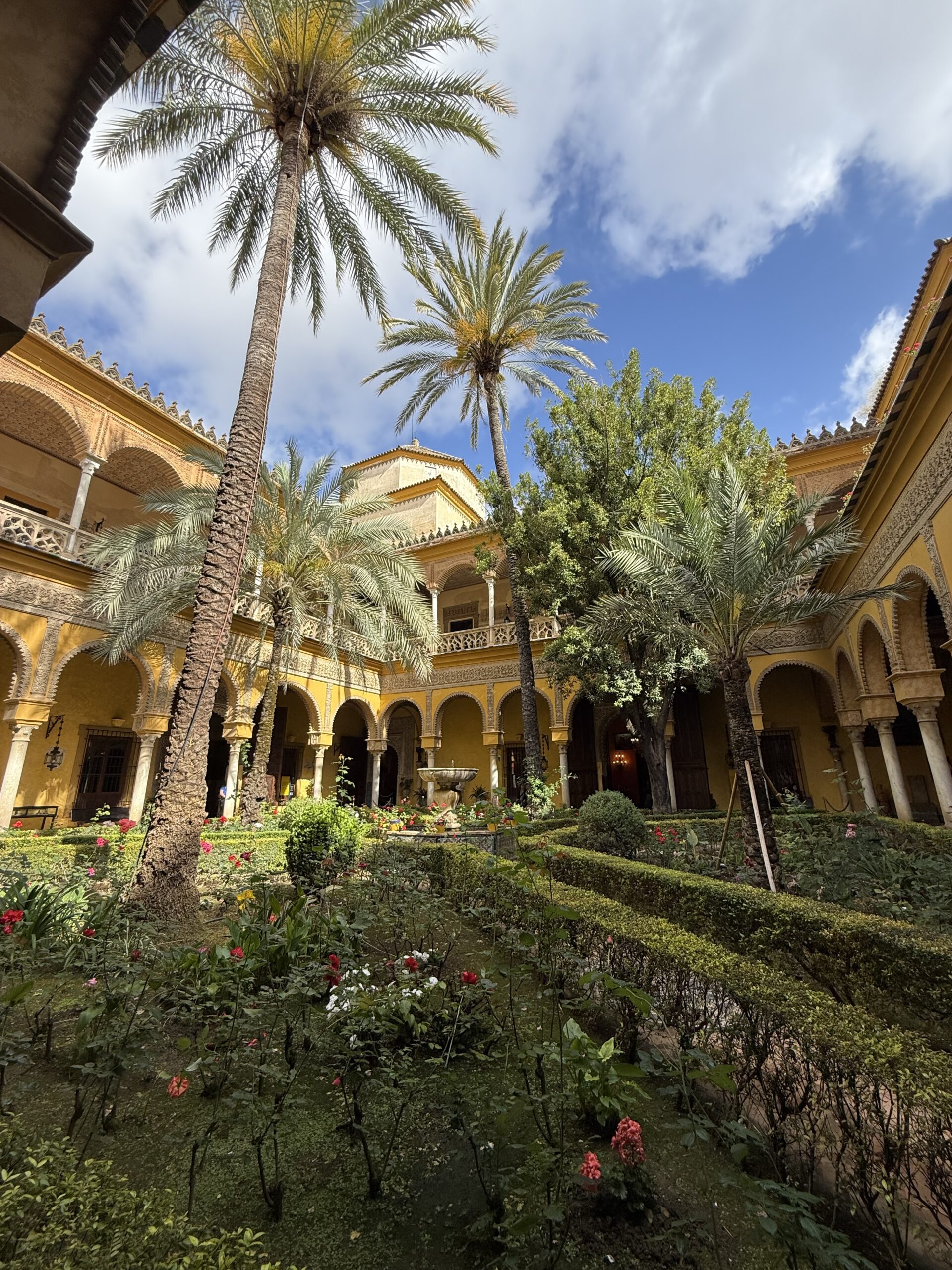
In a city full of impressive monuments and royal palaces, it’s easy to overlook some of the more intimate spots — places that quietly capture the soul of Seville. Palacio de las Dueñas is one of those places. Tucked behind a simple entrance gate near the old city walls, this palace doesn’t shout for attention. Instead, it invites you in with calm courtyards, colorful tiles, and a deep sense of history.
It’s not just a beautiful building — it’s a place full of stories, art, and timeless Andalusian charm.
A palace with noble roots
Palacio de las Dueñas was built between the 15th and 16th centuries and originally belonged to the Pineda family, part of Seville’s local nobility. Over time, it passed into the hands of the powerful House of Alba — one of Spain’s most prestigious aristocratic families.
For many years, it served as the winter residence of the Dukes of Alba. The palace reflects a mix of Gothic, Moorish, and Renaissance styles, which is typical of Andalusian architecture. But unlike some of the city’s more monumental buildings, Dueñas feels personal — almost like a private home where time has stood still.
The duchess and her legacy
Perhaps the most famous resident of the palace was Cayetana Fitz-James Stuart, the 18th Duchess of Alba. Known for her colorful personality and eccentric style, she was one of the most talked-about figures in Spanish high society. She spent much of her life in this palace and opened it to visitors shortly before her death in 2014.
Her presence is still felt in the rooms and gardens — through family portraits, antique furniture, and her collection of personal items. There’s a warmth here that makes the palace feel alive, not frozen in history.
Courtyards full of life
One of the highlights of Palacio de las Dueñas is its series of courtyards and gardens. As soon as you walk in, you’re welcomed by a peaceful orange-tree patio, with fountains, ceramic tiles, and iron lanterns. Bougainvillea climbs up the walls, and the sound of birds mixes with the quiet splash of water.
These courtyards are not just for decoration — they were an essential part of daily life in the palace. You can imagine people sitting here with a glass of wine in the evening or escaping the summer heat in the shade.
The layout reflects a typical Andalusian house, where open-air spaces blend naturally with indoor salons, making the most of the region’s sunny climate.
A walk through art and memory
Inside, the rooms of the palace are filled with artwork, antiques, and historic objects. You’ll see everything from Roman busts and 19th-century paintings to handwritten letters and flamenco memorabilia.
One of the most touching displays is the room dedicated to Antonio Machado, one of Spain’s most beloved poets. He was born in this very palace in 1875, when his family lived here as tenants. A plaque in the courtyard marks the spot, and a room inside shares his story and poetry.
As you walk through the halls, it feels less like a museum and more like wandering through a lived-in home — full of layers, character, and soul.
Details that make the difference
What sets Palacio de las Dueñas apart isn’t just its architecture or its noble history — it’s the small details that bring the space to life. The hand-painted tiles along the staircases. The mismatched flower pots. The slightly faded rugs. Even the old library smell in some of the rooms.
It doesn’t feel polished or over-restored. It feels real. Like a home that has been lived in, loved, and remembered.
Tips for your visit
• location: calle dueñas 5, very close to the setas (metropol parasol)
• opening hours: usually 10:00 am – 6:00 pm (check for seasonal changes)
• tickets: around €12 for adults, with discounts for students and seniors
• best time to go: early morning or late afternoon for softer light in the courtyards
• recommended visit time: 1 to 1.5 hours
There’s also a small gift shop near the exit with books, crafts, and souvenirs inspired by the house and its residents.
Quiet beauty in the heart of the city
While the Alcázar and the Cathedral tend to get all the attention (and long lines), Palacio de las Dueñas offers a quieter, more reflective experience. It’s a place where you can wander at your own pace, take in the scent of jasmine, and connect with Seville’s layered identity — from its noble past to its poetic soul.
Whether you’re a fan of architecture, history, or simply looking for a peaceful moment away from the crowds, Dueñas is well worth a stop.
Final thoughts
Palacio de las Dueñas isn’t flashy or grand in the way you might expect from a royal home. But that’s exactly what makes it special. It feels human — lived-in, warm, and rich in stories. It shows a side of Seville that’s deeply personal, full of texture and life.
So if you’re wandering the streets of Seville and want to step into a space where time slows down and beauty is found in the details, head to this hidden palace. You might just fall in love with the city all over again.
If you want to know more about Palacio de las Dueñas and other historic buildings in Seville. Book a bike tour and discover it for yourself!

