
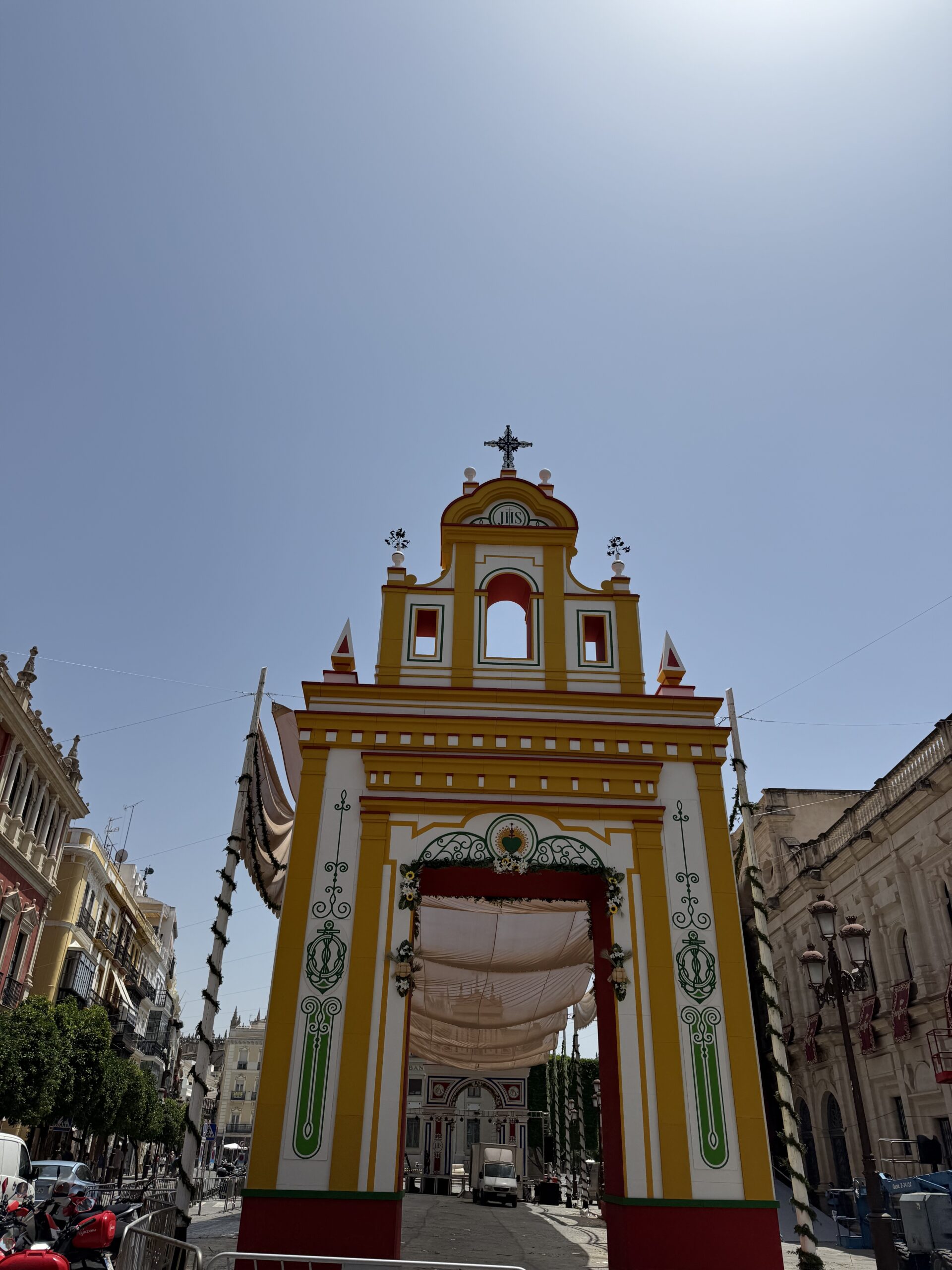
If you’re lucky enough to be in Seville at the end of May or early June, you might stumble upon something truly special a city transformed for one of its most important religious celebrations: Corpus Christi. With decorated streets, ancient rituals, and a morning full of music and incense, Corpus Christi is a feast for the senses and a window into the deep spiritual and cultural traditions of Andalusia.
Whether you’re a believer or simply a curious traveler, this day offers a unique opportunity to see Seville in a more ceremonial, almost magical light.
What is Corpus Christi?
Corpus Christi (Latin for “Body of Christ”) is a Roman Catholic feast that celebrates the belief in the real presence of Christ in the Eucharist. In Seville, the celebration is as old as it is elaborate it dates back to the 13th century, when it was first introduced by King Alfonso X, just decades after the Christian reconquest of the city.
Over time, it evolved into one of Seville’s most important annual events, second only to Semana Santa and Feria de Abril. But while those festivals are well-known internationally, Corpus Christi remains more intimate and sacred, with traditions that connect deeply with local life.
The day of the procession
Corpus Christi always falls on a Thursday, 60 days after Easter. On this morning, while most of the city is still waking up, the historic center begins to fill with life.
The main event is a solemn yet beautiful religious procession, which begins at around 8:30 am and winds through the city’s historic heart. It starts and ends at Seville Cathedral, but follows a carefully prepared route past the Town Hall, along Calle Sierpes, and through decorated plazas.
The stars of the procession are religious floats (known as pasos), carried by costaleros and accompanied by priests, choirs, and members of Seville’s oldest brotherhoods. The most iconic elements include:
• The Custodia de Arfe, an enormous, richly decorated silver monstrance created in the 16th century.
• Statues of beloved local saints, such as San Isidoro, San Leandro, and Santa Justa y Rufina.
• The figure of the Immaculate Conception, heavily venerated in Seville.
What makes this procession different from Semana Santa is its daylight setting, its peaceful pace, and the presence of children dressed in white, who have recently celebrated their First Communion.
A city dressed for the occasion
One of the most charming aspects of Corpus Christi is how Seville dresses itself for the day. You’ll see:
• Balconies and windows draped with red damask fabrics and religious imagery.
• Flower carpets and herbs like rosemary and thyme covering the streets, leaving a fragrant trail underfoot.
• Altars set up along the procession route, decorated with candles, statues, and offerings by local shops, associations, and families.
Shaded awnings (called toldos) are hung above the streets to protect from the sun a tradition that both keeps the city cooler and adds to the festive yet sacred atmosphere.
Corpus Christi beyond the morning
Although the procession is the main event, Corpus Christi is more than just one morning. In the days before, Seville hosts concerts, religious services, and public exhibitions. The Cathedral holds special masses, and the Custodia de Arfe is displayed for public viewing.
It’s also a time when families gather, old Sevillian traditions are honored, and the rhythm of the city slows just enough for reflection.
Many locals take the day off, and though it’s not as packed with tourists as other festivals, you’ll notice a quiet buzz in the air cafes filling after the procession, people talking about their memories of Corpus as they sip coffee or cool agua de azahar.
Tips for experiencing Corpus Christi in Seville
1. Wake up early. The best way to enjoy the procession is to arrive around 8:00 am and find a spot near the Cathedral or on Calle Francos. The earlier, the better — locals come out in large numbers.
2. Dress respectfully. This is a religious event. While there’s no strict dress code, most attendees wear smart clothing. Avoid beachwear or tank tops.
3. Explore the altars. After the procession, take a walk through the center and admire the temporary altars and floral decorations they are often gone by the afternoon.
4. Visit the Cathedral. The main monstrance and other relics are often on special display inside. It’s one of the best times to visit with extra meaning.
5. Stay cool. June mornings can already be warm. Bring water, a hat, and sunscreen if you plan to watch the entire event.
A moment of timeless beauty
Corpus Christi in Seville isn’t loud or flashy. It’s not about big crowds or bright lights. It’s about tradition, memory, and devotion, passed down through centuries.
And if you’re joining one of our bike tours during this time, you’re in luck we pass through the same streets where the procession takes place. As we ride past Seville’s Town Hall and into the shadow of the Cathedral, we’ll share the stories behind the saints, the silver, and the silent beauty of a city that knows how to honor its past.
You don’t have to be religious to feel moved. You just have to be present.

