
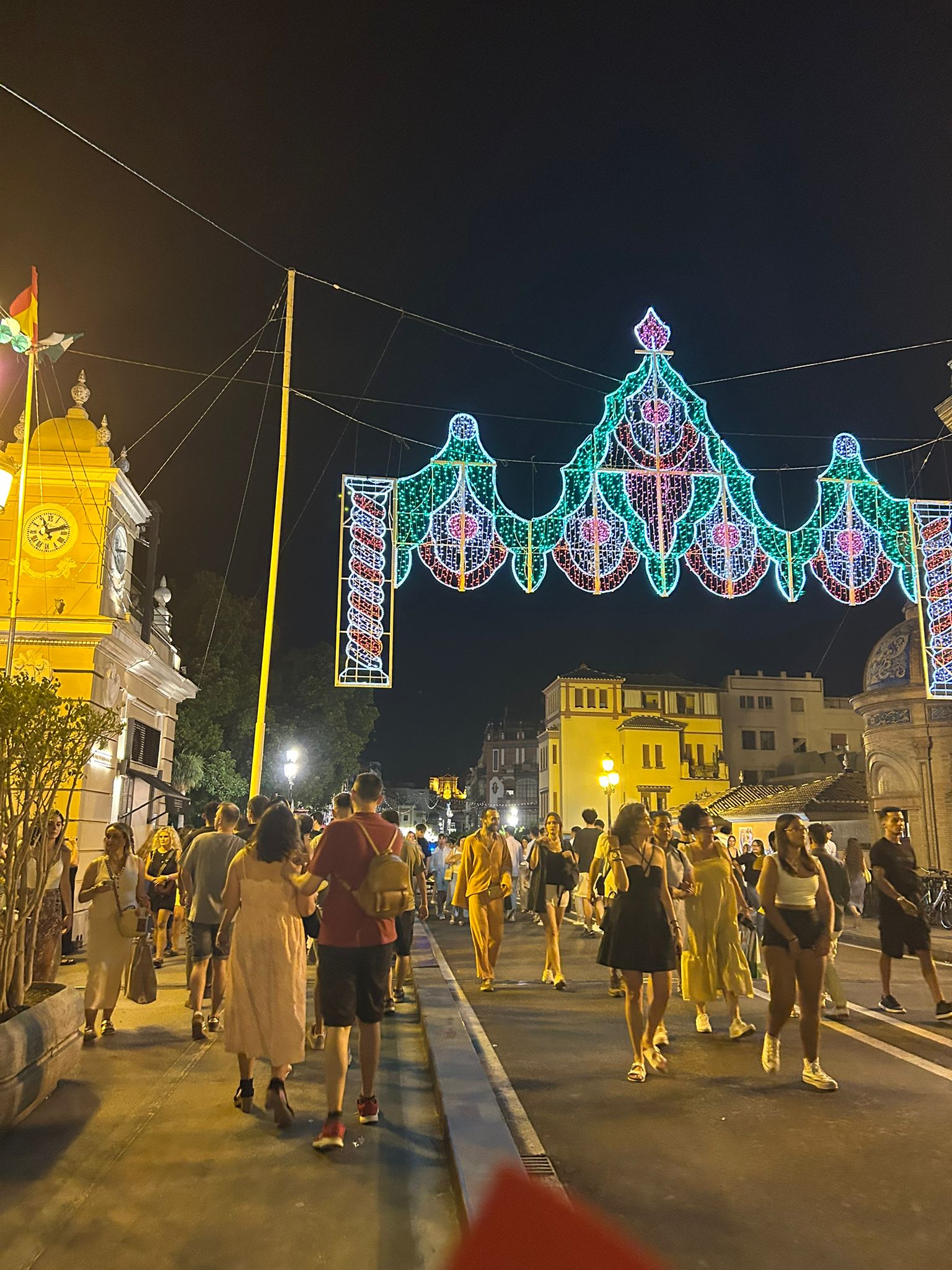
Every year in July, the neighborhood of Triana in Seville bursts into vibrant colors, flamenco rhythms echo through the streets, and an atmosphere of togetherness and tradition fills the air. That’s when Triana celebrates its most cherished festival: La Velá de Santa Ana. This centuries-old folkfestival unites locals and visitors around religion, music, food, and games — all with warm, truly Sevillian charm.
What is La Velá de Santa Ana?
On the opposite side of the Guadalquivir River lies the enchanting neighborhood of Triana. Every summer evening, a week-long festival takes place here. But this is no ordinary celebration: it honors Santa Ana, mother of Mary, and the namesake of Triana’s main church. As the oldest neighborhood festival in the city, it brings extraordinary events each year. Hotels, house façades, cafés, and bars throughout the neighborhood are lavishly decorated with colorful lights and banners. All festivities center around the Iglesia de Santa Ana and Calle Betis, where the casetas (small festive booths) are set up.
The program is incredibly rich and diverse: spectacular concerts, thrilling sports competitions, and a new-but-fascinating cultural program focused on Triana’s own heritage, all featured in the daily schedule. The most famous event is la cucaña (literally “greased pole”), first introduced in 1910: participants attempt to walk along a slippery pole extended from a boat to grab a flag without falling into the river. There is dancing, drinking, eating — an enchanting atmosphere rich with music and joy.
Why and when is it celebrated?
Let’s travel back more than 800 years to the origin of La Velá de Santa Ana. Its roots go back to the 13th century, and what began then has become a magical festival today. It all started when King Alfonso X suffered from an eye ailment. He vowed to build a temple in honor of Santa Ana, in gratitude if he recovered. The construction of Triana’s “cathedral” began in 1266, forever linking Santa Ana and this festival to the neighborhood’s history. What was once a religious vigil turned into an annual week-long celebration: music, dance, lights, and Sevillian conviviality along the Guadalquivir. Join us next year in Triana between July 21 and 26 to celebrate La Velá de Santa Ana together!
What makes La Velá de Santa Ana uniquely Triana?
La Velá de Santa Ana is more than a festival — it embodies the soul of Triana. The neighborhood is deeply connected to Santa Ana, who is regarded as the “patron saint of the common people.” As a traditional working-class area of potters, fishermen, and flamenco artists, Triana reflects its origins through the festival: artisanal stalls offering local dishes like pescaíto frito (fried fish) and caracoles (snails), spontaneous and scheduled performances from neighbors, families, and dance groups, street-wide flamenco and sevillanas. Pride and tradition permeate every corner — from bunting and lights to impromptu performances in the alleys.
Located along the Guadalquivir with panoramic views across the river, Triana’s identity remains strong in every detail. For many locals, La Velá is even more meaningful than the Feria de Abril: intimate, personal, and authentic — a festival by and for the people. Even former residents return year after year drawn by deep community ties. With roots extending back to the 18th century, it is the oldest neighborhood feast in Seville, and remains a living heritage passed through generations. Above all, La Velá is about neighborhood togetherness, and that warmth is palpable as you stroll through Triana’s streets during the festival.
More of Triana Beyond the Festival
Although the festival happens once a year, Triana has plenty to offer year‑round beyond La Velá de Santa Ana. On our guided bike tours of Seville, you’ll pedal through narrow streets and see first-hand the history of Triana and Santa Ana. Our inspiring guides share stories about the neighborhood’s origins and its influence on Seville’s culture over the centuries. Book a bike tour with us for a truly unique experience of Seville through local narratives.

