
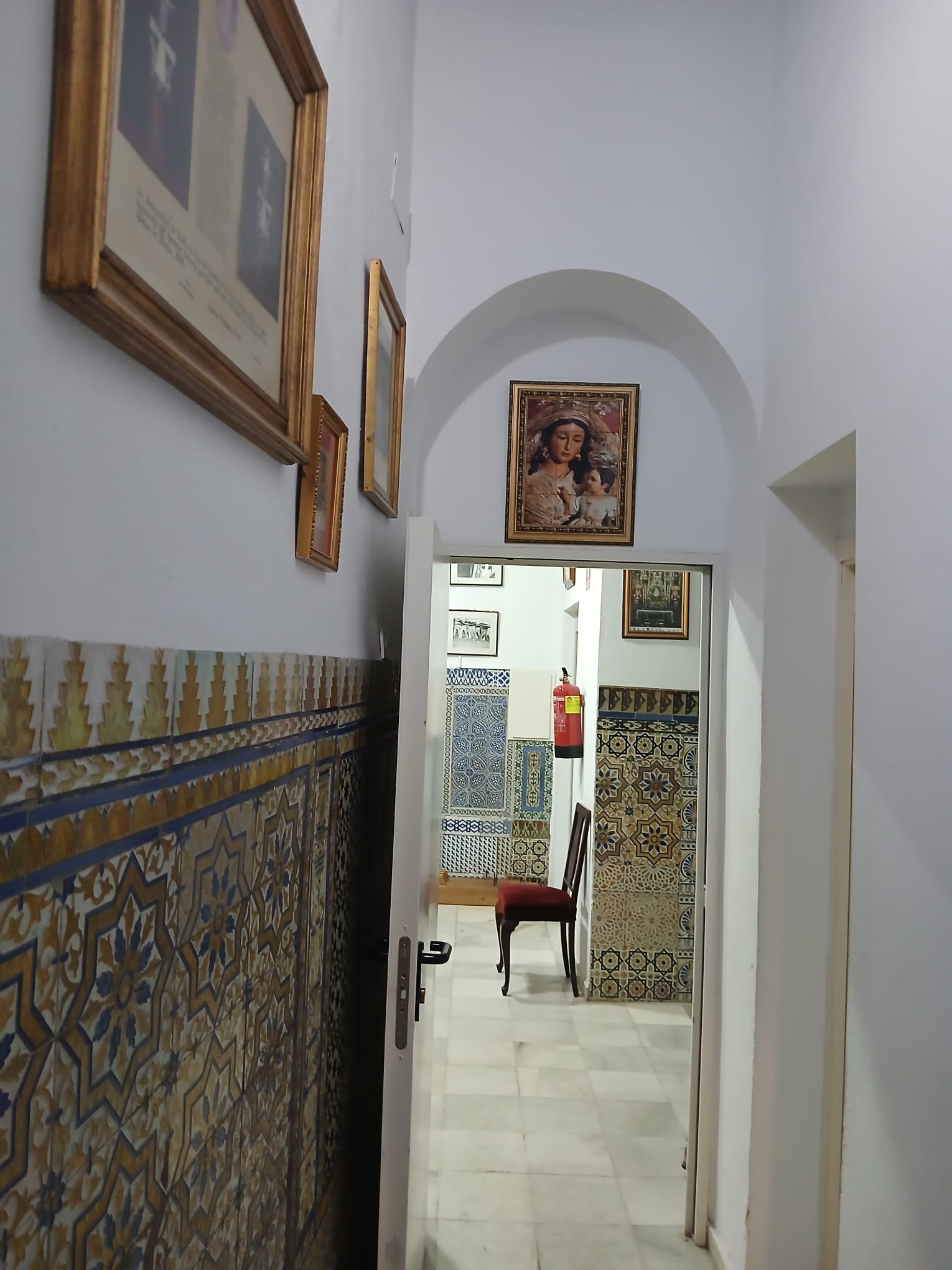
A house full of history and architectural meaning
Anyone who visits Seville cannot avoid the name Aníbal González. He is the man who changed the face of the city forever with his masterpieces, including the iconic Plaza de España. Less known, but just as fascinating, is his former residence: the House of Aníbal González, a beautiful building that was not only a home but also a demonstration of his architectural vision. This house reflects the soul of Seville itself, elegant, traditional and with a touch of modern refinement.
Where the house is located and how to get there
The House of Aníbal González is located on Avenida de la Palmera, one of the most characteristic avenues of Seville. This wide, palm-lined boulevard was developed in the early 20th century as part of the expansion plans for the Ibero-American Exposition of 1929, a project in which González played a central role. The house is close to Parque de María Luisa and Plaza de España, making it ideal to combine with a stroll through the surrounding area. It is easy to reach the house by bus, with lines 34 or C1 and C2, by bicycle using the bike lanes along Avenida de la Palmera, or even on foot if you are staying near the city centre. Visitors arriving by car will find parking options nearby, although these can fill up quickly during weekends.
The history of the house
The house was designed and built by Aníbal González himself in the 1910s as his personal residence and workspace. It served not only as a family home but also as a laboratory for his ideas, a place where he could test, refine and perfect his architectural style. It was within these walls that he worked on many of his best-known projects, including plans for the pavilions of the 1929 Exhibition. The design of the house is typical of González’s style, a combination of traditional Andalusian design with elements of neo-Mudéjar and regional architecture. The façade is made of red brick, ceramic tiles, wrought-iron balconies and wooden details, all characteristic of his manner of building. Inside, an elegant patio with columns and mosaic tiles forms the centre of the house, symbolising the Sevillian lifestyle of openness, light and harmony with nature.
Who was Aníbal González
Aníbal González Álvarez-Ossorio (1876–1929) was one of the most important Spanish architects of the 20th century and is considered the father of the Regionalist Architecture of Seville. He studied at the University of Seville and later at the Superior School of Architecture in Madrid, where he was influenced by modernism and by the growing interest in traditional Spanish architectural heritage. When he returned to Seville, he combined modern construction techniques with local styles such as Mudéjar, Gothic and Renaissance. González believed that architecture should not only be functional but should reflect the spirit and history of a city. His buildings are therefore not only visually impressive but also deeply connected to Andalusian cultural identity.
His greatest works in Seville
Aníbal González was the chief architect of the Ibero-American Exposition of 1929, for which he designed dozens of buildings. His masterpiece is undoubtedly the Plaza de España, a majestic semi-circular structure with bridges, fountains and thousands of colourful tiles representing the Spanish provinces. He also designed the Mudéjar Pavilion (now the Museum of Folk Art), the Royal Pavilion and several buildings in Parque de María Luisa. His work defines the Seville we know today, a city where tradition and elegance blend with creativity and craftsmanship.
Architectural features of his house
The House of Aníbal González is a living example of his design principles. The structure is centred around the patio, the heart of the house, which brings light and ventilation to the interior. Surrounding this inner courtyard are the living spaces, each decorated with detailed tilework and wooden ceilings with geometric patterns. The façade has a strong visual rhythm thanks to the alternation of brick and ceramic. Above the main entrance is an elegant arch with a mosaic of the Virgin Mary, a reference to González’s religious devotion. The roof, with its curved Arabic tiles, is also characteristic of regional architectural traditions.
The meaning of the house for Seville
The House of Aníbal González is more than an old building; it is a piece of living history. It recalls a time when Seville reinvented itself as the cultural capital of southern Spain. For many residents, the house represents pride, craftsmanship and dedication to local tradition. Although the building is not always open to the public, the exterior can be admired at any time, and guided tours or cultural events are sometimes organised, allowing visitors to see the interior. Some architecture enthusiasts even call it the “small Plaza de España”, because it expresses the same spirit and style on a more intimate scale.
The legacy of Aníbal González
Tragically, Aníbal González died in 1929, shortly after the Ibero-American Exposition opened. He did not live to see the full completion of his life’s work. Yet his legacy lives on in every tile, arch and fountain he designed. In 2011, a statue in his honour was placed at Plaza de España, where he looks out over his masterpiece, a touching tribute to the man who gave Seville its modern identity.
The house in today’s context
Today, the House of Aníbal González remains a beloved site for architecture students, art lovers and tourists. It occasionally serves as a venue for exhibitions, open days or cultural routes highlighting the architect’s work. The neighbourhood surrounding it, Avenida de la Palmera, is still one of the most prestigious and leafy areas of Seville, filled with old villas, university buildings and gardens from the same era.
Visit and photography tips
When visiting the house, take time to observe the details of the façade: the ceramic patterns, the ironwork and the subtle Andalusian decorations. Combine your visit with a walk to the nearby Plaza de España, Parque de María Luisa and the Mudéjar Pavilion, which together offer a complete picture of González’s vision for Seville. For photographers, the house is particularly beautiful in early morning or late afternoon light, when the sun colours the brick deep red and the palm trees cast long shadows across the façade. Conclusion
The House of Aníbal González is much more than an architectural monument; it is a tangible reminder of the creativity, passion and pride of a city that knows how to combine tradition with modernity. In this villa among the palm trees, much of the architectural dream that shaped modern Seville took form. Anyone who truly wants to understand the city should not only admire Plaza de España, but also visit the place where its creator lived and worked, the House of Aníbal González.

