
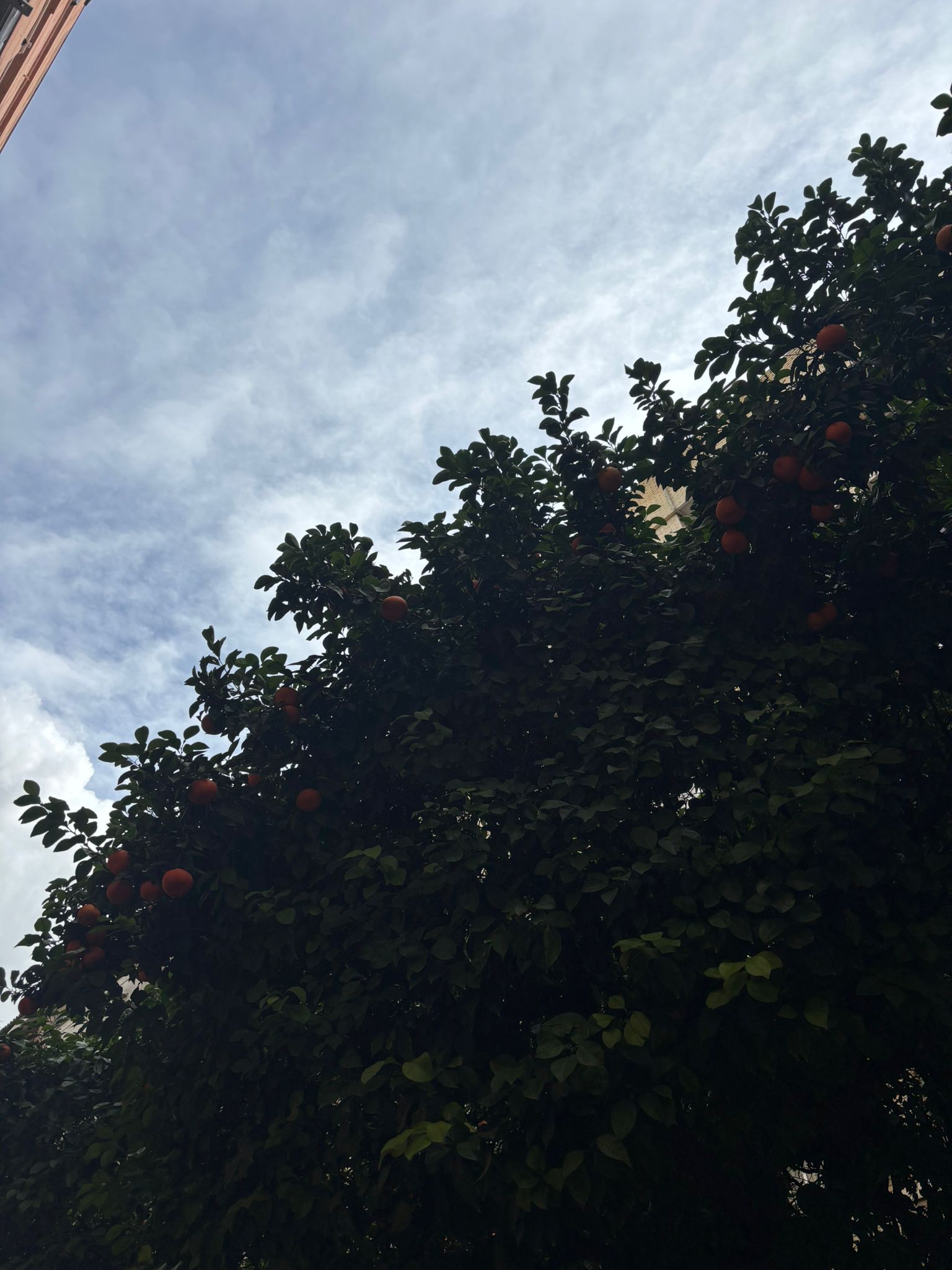
The first thing you notice when walking through Seville is the abundance of orange trees. In seasons such as spring and autumn, the scent of citrus and blossom fills the streets. Specifically, the scent of the naranjo amargo, the bitter orange tree that has dominated Seville’s streetscape for centuries. What many people don’t know is that behind that scent lies a story that goes far beyond tourist charm. It is a story of history, culture, craftsmanship and an unexpected transformation from orchard to glass.
A history that dates back to the Moors
The naranjo amargo is not native to Andalusia. It was brought here by the Moors, who planted citrus trees in southern Spain in the 10th century. For them, oranges were not only a fruit, but also a symbol of purity, abundance and paradise gardens. Water, shade and fragrance were central to the Islamic architecture of Al-Andalus, and the orange tree was a perfect fit. The trees were mainly planted in patios, courtyards and later also in streets and squares. This was because the trees provided shade in the hot summers, but interestingly, they were bitter oranges, not the sweet varieties we buy in the supermarket today. The bitter variety was stronger and more resistant to heat and drought. Moreover, it produced a fruit that was ideal for preservation and processing.
Over the centuries, the tree has become a symbol of the city. Today, Seville has around 40,000 orange trees, more than any other city in Europe. Tourist shops and murals in Seville often feature images of oranges, such as magnets or small paintings.
From orchard to glass: the journey of the Seville orange
Although the oranges in Seville look beautiful, they are hardly edible when raw. They have a sharp taste, but it is precisely this bitterness that makes them particularly suitable for a completely different purpose, namely for making marmalade. And here comes the surprising part of the story. A large proportion of the oranges picked from the trees in Seville travel all the way to the United Kingdom. In general, the British love marmalade, and Seville oranges are an essential ingredient in the recipe. The journey begins in January or February, when the fruit is ripe enough. They are picked and sorted by hand and then exported. In British cuisine and factories, they are processed into a delicious marmalade known for its deep flavour with a slight bitterness and rich aroma.
Citrus fruits are also given a second life in Seville. Local producers use them to make liqueurs, oils and even craft beer. Even the peel is used to make perfumes and pastries, for example. The blossom, or the famous azahar, is used in tea syrup and various cosmetics.
A symbol that defines the city
The citrus tree is more than just a tree; it is a cultural symbol deeply rooted in Seville’s identity. In spring, the scent of azahar heralds the arrival of Semana Santa, one of the city’s most important religious festivals. For many Sevillians, the scent is an emotional reminder of family and tradition. In summer, the trees provide coolness and colour in the intense heat. In winter, the streets are hung with bright orange citrus fruits, as if the city were decorating itself.
The harvest season, when Seville turns orange
The orange harvest season is an annual event. The fruit begins to change colour in November, but it is not until January and February that it is at its best. Then, pickers with long poles and nets can be seen everywhere in the city, while lorries full of oranges drive through the narrow streets. It is a short but intense season. The trees blossom in spring and bear fruit in winter. After that, the process starts all over again. The orange ripening season also influences the rhythm of the city.
Address: Calle Alcalde Isacio Contreras, 1, Seville
Website: www.atdspain.com
Instagram: @ATD.spain
TikTok: @ATD.spain
Facebook: Andalucia Tours and Discovery

