
At the beginning of the 20th century, politician, writer, and activist Blas Infante played a decisive role in shaping the identity of Andalusia. The region of Andalusia has ancient roots, but Blas Infante is seen as the person who gave Andalusia a modern political and cultural identity.
Blas Infante was born on 5 July 1885 in the small village of Casares, where he grew up to become a great advocate for autonomy in Andalusia. Blas Infante believed that the region had a right to recognition, self-government and pride in its own history and culture.
The father of Andalusian nationalism
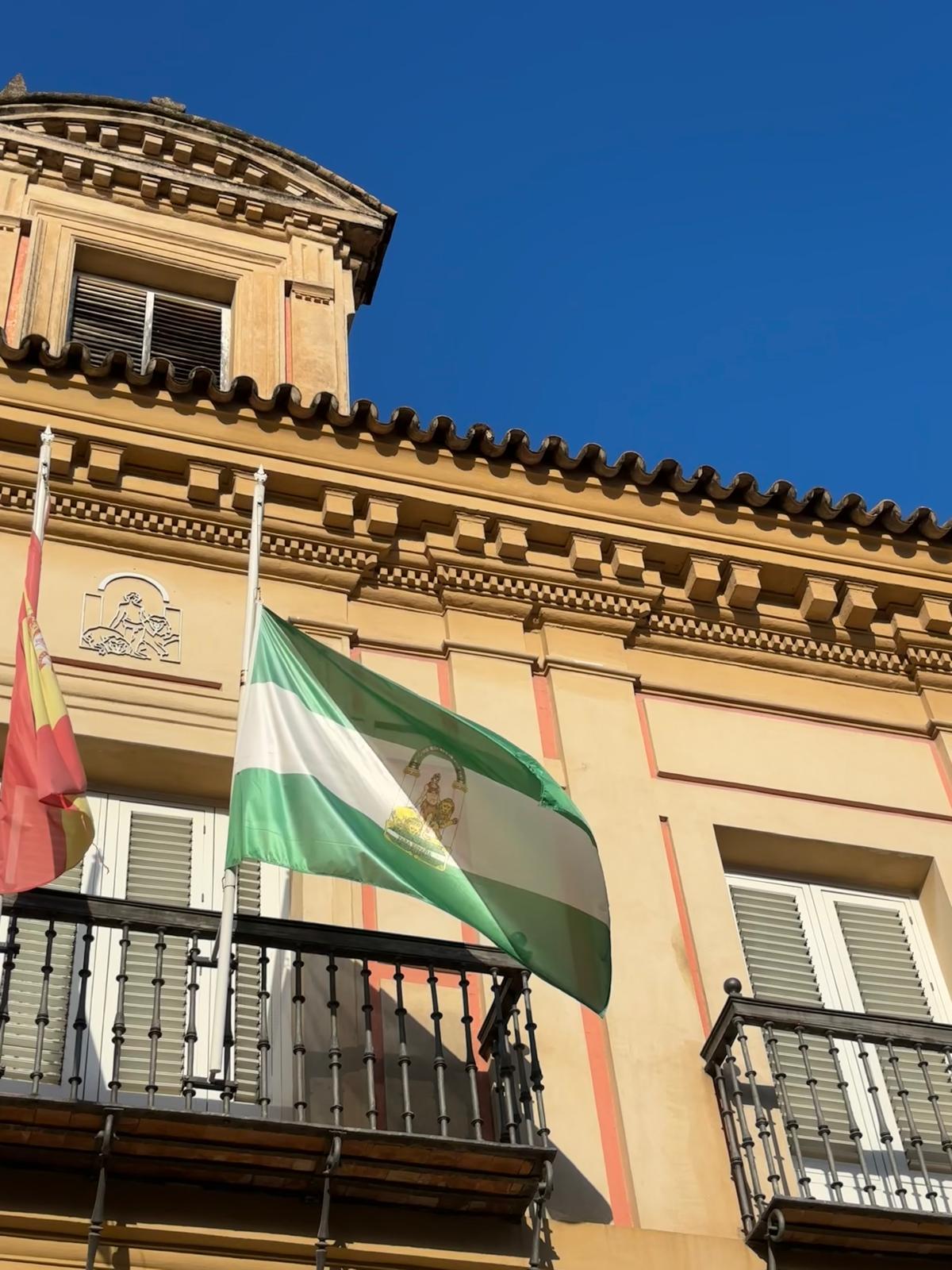
Blas Infante is considered “the father of Andalusian nationalism” here in Andalusia. He is the person who sang the Andalusian anthem and designed the green and white flag for Andalusia. As a result of these symbols, he not only gave the region more visibility, but also created a sense of unity and self-esteem.
Blas Infante’s ideas were progressive and focused on social justice and regional autonomy. At a time of political tension in Spain, this was not without risk. Blas Infante’s vision was both cultural and political; he believed that Blas.
Execution during the Spanish Civil War
During the Spanish Civil War, dictator Francisco Franco was in power and considered Blas Infante’s ideas dangerous, as his plea for autonomy and his progressive ideas did not fit in with Francisco Franco’s centralist and authoritarian ideology. On 11 August 1936, Blas Infante was executed along the old road between Seville and Carmona. He was 51 years old. Ultimately, his ideals proved fatal.
Many people say that his last words were ‘Viva Andalucía libre!’ which means Long live free Andalusia. The death of Blas Infante became a symbol of the struggle for freedom and autonomy in Andalusia. After his death and during Franco’s dictatorship, his ideals were suppressed, but they never completely disappeared.
The road to autonomy
In 1975, the dictator Franco died, and Spain began its transition to democracy. During this period, the discussion about regional autonomy was reignited, and the ideas that Blas Infante had had before his death became relevant once again.
In 1980, a referendum was held on autonomy, and one year later, in 1981, Andalusia was officially recognized as an autonomous community within Spain. This marked an important milestone in the history of Andalusia.
Unfortunately, Blas Infante did not live to see this milestone, but it is widely recognized that his work and vision formed the basis for this recognition.
Casa de la Alegría
The memories of Blas Infante are still actively kept alive today. His former home, Casa de la Alegría, is in Coria del Río, near Seville. His house is now part of the Museo de la Autonomía de Andalucía.
Here, visitors can gain an insight into his life, writings, and his role in the creation of the Andalusian identity. The museum serves not only as a memorial, but also as an educational center where the history of autonomy is explained. Blas Infante is commemorated here not only as a politician, but also as a thinker and idealist who believed in cultural pride, self-determination, and justice.
Lasting influence on Andalusia
Blas Infante gave Andalusia more than just political ideas; he gave Andalusia its own narrative about the region itself. He emphasized that Andalusia was not just a geographical area, but a community with its own history, culture, and future.
Blas Infante’s life ended tragically, but his ideas survived Franco’s dictatorship and eventually became part of democratic Spain. Today, Blas Infante is still recognized as a key figure in the modern history of Andalusia.
In Andalusia, where centuries-old traditions formed the foundation of the region, it was Blas Infante who gave the region a clear voice, a voice that called for freedom, dignity, and autonomy, and he succeeded.
Blas Infante and Andalusia Day
Andalusia Day commemorates the granting of autonomy to Andalusia on 28 February 1980. Throughout the day, green and white flags are flown, and the Andalusian anthem is played. Andalusia Day is linked to the 1980 referendum, but on that day a historical link is made to Blas Infante, because his work was largely responsible for this. Thanks to him, the green and white flag is now hoisted, and the anthem sung.
Andalusia Day is therefore no longer just a celebration of political autonomy but has become a moment when the ideals of Blas Infante are made visible. His dream of a self-aware and autonomous Andalusia resonates symbolically throughout the city on that day, in squares, schools and ceremonies.
Would you like to hear more of these special and interesting stories about Seville? During our bike tour, we tell more stories like these about history, local customs, festivals, etc. Are you curious? Or do you have any other questions? We are more than happy to answer all your questions, whether online or in our shop. We are happy to help!
Adres: Calle Alcalde Isacio Contreras, 1, Sevilla
Website: www.atdspain.com
Instagram: @ATD.spain
TikTok: @ATD.spainFacebook: Andalucia Tours and Discover

