
Seville as the Starting Point of a New Era
When people think of Christopher Columbus’s discovery of the Americas, attention often focuses on his famous voyage in 1492. Less well known is just how important Seville actually was to his success. The city played a major role in the preparation, trade, and dissemination of everything related to the voyages of discovery. Without Seville, Columbus would likely never have become as famous as he is today.
By the fifteenth century, Seville was already an important city in Spain. Thanks to its location on the Guadalquivir River, ships could easily sail from the city to the Atlantic Ocean. This made Seville perfect for trade and voyages of discovery. When Columbus received support from King Ferdinand and Queen Isabella of Spain, Seville quickly became the hub of the new trade routes with the Americas.
Columbus and La Cartuja
A lesser-known aspect of the connection between Columbus and Seville is the La Cartuja monastery. Columbus stayed here for a while before he discovered America. The monks provided him with lodging and helped him make contacts for his travel plans. As a result, La Cartuja played an important role in the preparation of his famous voyage. Today, many tourists are unaware that this place was so significant to Columbus’s history.
Seville’s Wealth Thanks to Columbus
After the discovery of the Americas, Seville underwent a dramatic transformation. The city grew to become one of the wealthiest in Europe. Ships returned from the New World laden with gold, silver, spices, and other valuable goods. Many of these goods first arrived in Seville before being distributed throughout Europe.
This created new jobs and strengthened the economy. Merchants, sailors, and wealthy families flocked to the city to profit from trade with the Americas. As a result, Seville became a bustling and international city. Markets, ports, and warehouses could be found everywhere.
An important building from that era is the Archivo de Indias. All documents related to trade and voyages of discovery were kept in this building. Today, it is a museum where old maps, letters, and reports by Columbus can still be found. This demonstrates just how deep the connection between Columbus and Seville actually is.
This shows just how deep the connection between Columbus and Seville really is.
The Hidden Side of the Voyages of Discovery
Yet this growth also had a dark side. The discovery of the Americas brought not only wealth to Spain, but also great suffering to the indigenous peoples of the Americas. The arrival of the Europeans led to wars, slavery, and diseases that killed millions of people.
Seville benefited financially from this colonial trade. The city earned a great deal of money from products imported from the Americas. That is why the connection between Columbus and Seville is sometimes viewed critically today. Some people feel that Columbus is seen too much as a hero, while others want attention focused on the negative consequences of his voyages.
Statues and monuments of Columbus can still be found in Seville. Tourists often admire these sites without reflecting on the full history behind them. As a result, the debate continues over how Columbus should be viewed today.
Traces of Columbus in Seville
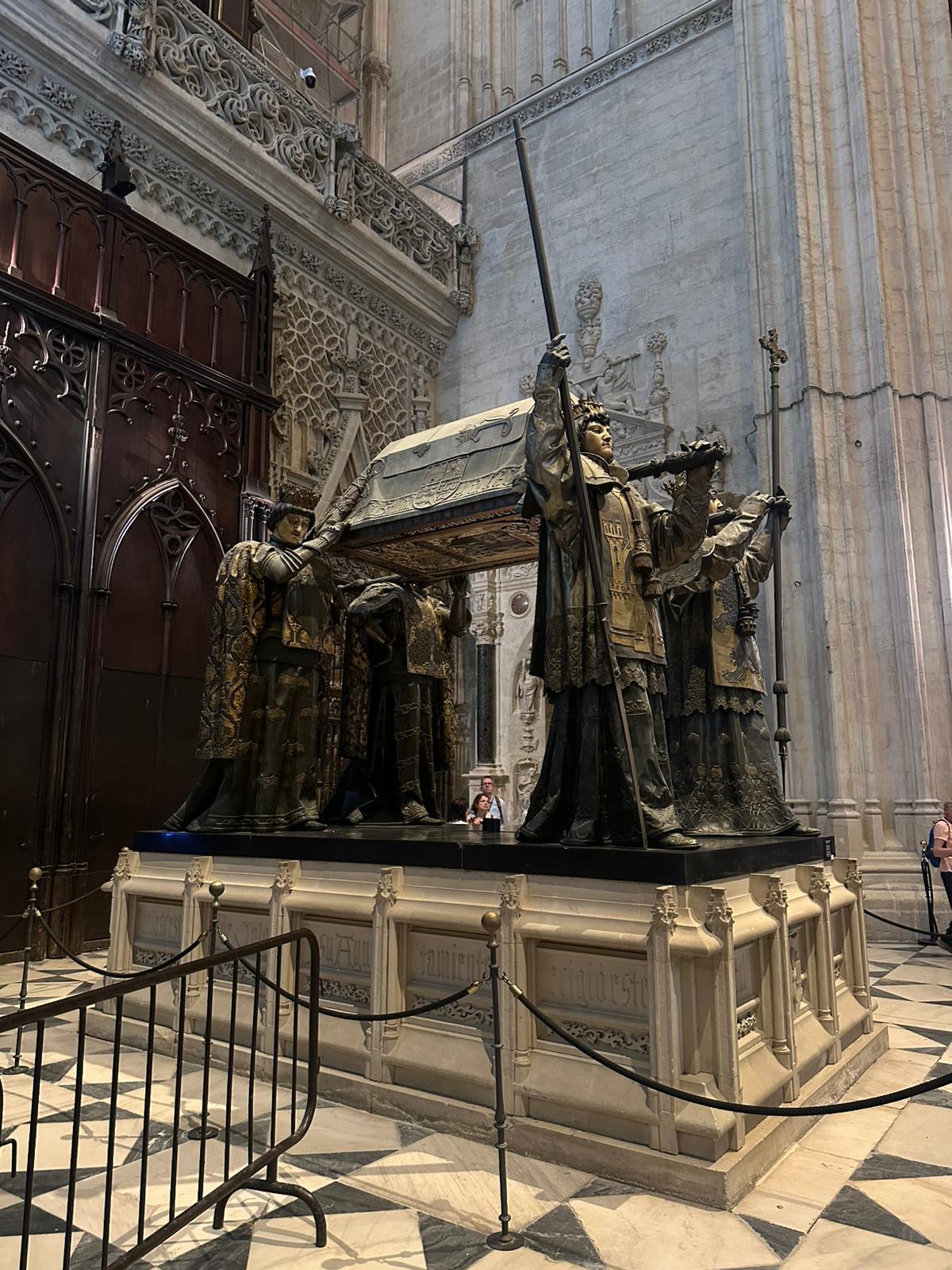
Anyone walking through Seville today can still find many reminders of Columbus. For example, Seville Cathedral houses a large tomb that, according to many historians, contains the remains of Columbus. Thousands of tourists visit this site every year.
The Guadalquivir River also serves as a reminder of the Age of Discovery. Ships once set sail from here bound for the Americas. The river made Seville wealthy and gave the city a prominent position in global trade.
In addition, the influence of the Americas is still evident in Seville’s culture. Products such as tomatoes, potatoes, and cocoa came to Europe via Columbus’s trade routes. Today, these products are an integral part of European cuisine.
A history that lives on
The connection between Columbus and Seville is therefore much deeper than many people realize. Seville was not just a city that Columbus happened to pass through, but the true hub of trade and exploration after 1492. Seville’s wealth and growth are closely linked to Columbus’s voyages and the discovery of the Americas.
At the same time, this history also shows that discoveries did not only have positive consequences. While Seville grew richer, many people in the Americas faced violence and oppression. That is why Columbus remains a figure about whom opinions vary.
What is clear, however, is that Seville and Columbus are inextricably linked. The city still bears the traces of this extraordinary and complex history.
Would you like to discover the traces of Columbus in a unique way? On our daily bike tour, we ride past several of these sites! If you have any other questions, we’d be happy to answer them. Whether online or in our store, we’re here to help!
Adres: Calle Alcalde Isacio Contreras, 1, Sevilla
Website: www.atdspain.com
Instagram: @ATD.spain
TikTok: @ATD.spain
Facebook: Andalucia Tours and Discovery

