
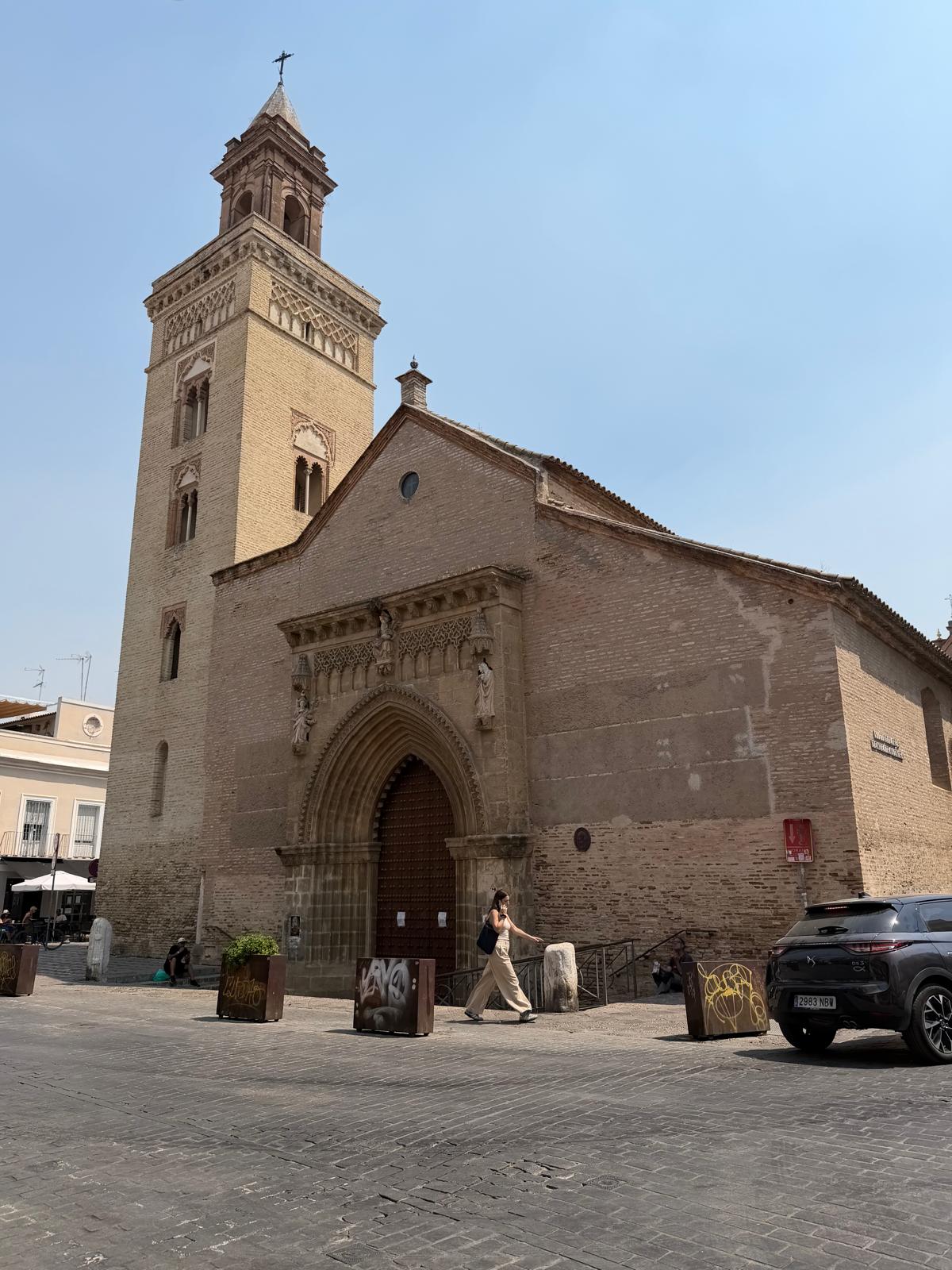
Anyone who cycles through the historic centre of Seville will quickly notice one thing: there seems to be a church, chapel or monastery on almost every corner. This is no coincidence. The enormous number of religious buildings tells the story of a city where different cultures, religions and centuries of history come together.
A city with a long history
Seville has a history that goes back thousands of years. The period of Al-Andalus had a major influence on the appearance of the city. At that time, Seville was an important Islamic city. After the Christian conquest in 1248, the cityscape changed dramatically. Many Islamic buildings were given a new function, while new churches and monasteries were built elsewhere. As a result, different historical layers can still be seen side by side today.
One of the best-known examples is Seville Cathedral. It was built on the site of the large mosque from the Islamic period. The famous Giralda was originally the minaret of this mosque and later became part of the Christian cathedral. When you walk or cycle through Seville, you therefore encounter not only Christian architecture: older Islamic influences can still be found in many details.
The wealth of Seville
In the 16th century, Seville became one of the most important trading cities in Europe. A large part of the trade with the New World passed through its port. The city became enormously wealthy, and this wealth was also reflected in its religious buildings.
Wealthy families, merchant guilds and religious orders contributed to the construction and decoration of churches and chapels. This resulted in impressive buildings with beautiful façades and interiors filled with paintings, sculptures, colourful tiles and, in some cases, enormous amounts of gold leaf.
In addition to the great cathedral, there are therefore dozens of smaller churches, each with its own story. Some are hidden among the narrow streets and only catch your eye when you take the time to cycle past slowly.
Monasteries and religious brotherhoods
Another important reason for the large number of churches is the presence of various religious orders. Dominicans, Franciscans, Carmelites, Jesuits and other orders had their own monasteries and churches in Seville.
Religious brotherhoods, known as hermandades, also continue to play an important role in the city. They are particularly visible during Semana Santa, Seville’s famous Holy Week. Large processions move through the streets and depart from various churches and chapels.
This means that churches in Seville are not only historic monuments. They are still an important part of everyday life and the traditions of the city.
Discover the churches on a bike tour
Seville’s unique character becomes especially clear from a bicycle. During a bike tour through the city, you cycle through historic neighbourhoods and pass various churches, chapels and squares along the way. You can admire the impressive cathedral up close but also discover smaller churches that visitors might easily overlook.
During our bike tour through Seville, we therefore don’t just visit the famous highlights. Along the way, we also tell you about the stories behind the buildings and show you how Seville’s history is reflected in its streets, squares and churches.
For example, we explain how the Islamic history, the Christian conquest and the enormous wealth of Seville all contributed to the cityscape you see today.
The many churches are, in a way, a kind of timeline of Seville. Behind every façade lies a piece of history. And from a bicycle, you have the opportunity to discover many of these stories in a single tour.
If you have any questions, we’d be happy to answer them. Whether online or in our shop, we’re here to help!
Address: Calle Alcalde Isacio Contreras, 1, Seville
Website: www.atdspain.com
Instagram: @ATD.spain
TikTok: @ATD.spain

