
Every day we assume that the products we need are available on shelves, fresh and at our fingertips. But have you ever wondered how the supply chain worked centuries ago, when refrigerated trucks, highways, or digital shipping didn’t exist?
Alcalá de Guadaíra: Where the myth was born
Between the Middle Ages and the Modern Age, Seville was one of the most populous and richest cities in the world, largely thanks to its monopoly on trade with the Americas. Feeding such a population was a herculean undertaking. The answer to this challenge was 15 kilometers away: Alcalá de Guadaíra, historically renamed “Alcalá de los Panaderos” (Bakers’ Alcalá).
As Seville grew vertically, Alcalá harnessed the power of nature. Thanks to a dense network of watermills of Arab origin along the Guadaíra River, the town became the industrial engine of Andalusian baking. An exceptional bread, pan de telera, was produced here, famous for its thick, white crumb capable of remaining fragrant for days.
The Logistics of the Past: A Race Against Time
The “Pane Trail” was a real vital artery. Every night, long before dawn, the magic began:
Preparation: Freshly baked bread was loaded into huge wicker baskets on the backs of donkeys and mules, protected by cloths to preserve its warmth and fragrance the journey: Hundreds of panaderos (bakers) formed very long caravans. The route ran alongside the remains of the Caños de Carmona, the ancient Roman aqueduct.
The entrance to Seville: The caravan made its triumphal entry through the Puerta de la Carne, the eastern gate of the city walls dedicated precisely to the access of food goods.
The point of arrival: Quality control in the “Plaza del Pan”
Once in the city, bakers settled in the commercial heart of Seville, in what we now know as the Plaza de Jesús de la Pasión, but which for centuries was simply the Plaza del Pan.
The bread market was strictly regulated by the authorities:
The “Cajones”: The square was a labyrinth of enclosed wooden pews and tents.
The Checks: The municipal inspectors (the fieles) weighed and checked every single loaf. Those who tried to sell bread of lesser weight or of poor quality suffered very heavy fines and the immediate seizure of the goods.
Competition: The bakers of Alcalá (the forasteros) had dedicated areas to sell directly from their baskets, in open and fierce competition with the local bakeries of Seville.
From animal traction to the “Bread Train”
With the advent of the Industrial Revolution, the Bread Trail changed skin but not its importance. In 1873, the Seville-Alcalá de Guadaíra railway line was inaugurated, which the citizens affectionately renamed “El Tren del Pan”.
The mules and donkeys gradually retired, replaced by wagons loaded with tons of bread that covered the distance in just a few minutes, modernizing a centuries-old tradition.
A legacy to visit even today
Today, bread is produced everywhere using modern technologies, but the Bread Trail has left an extraordinary historical and scenic legacy that we recommend visiting:
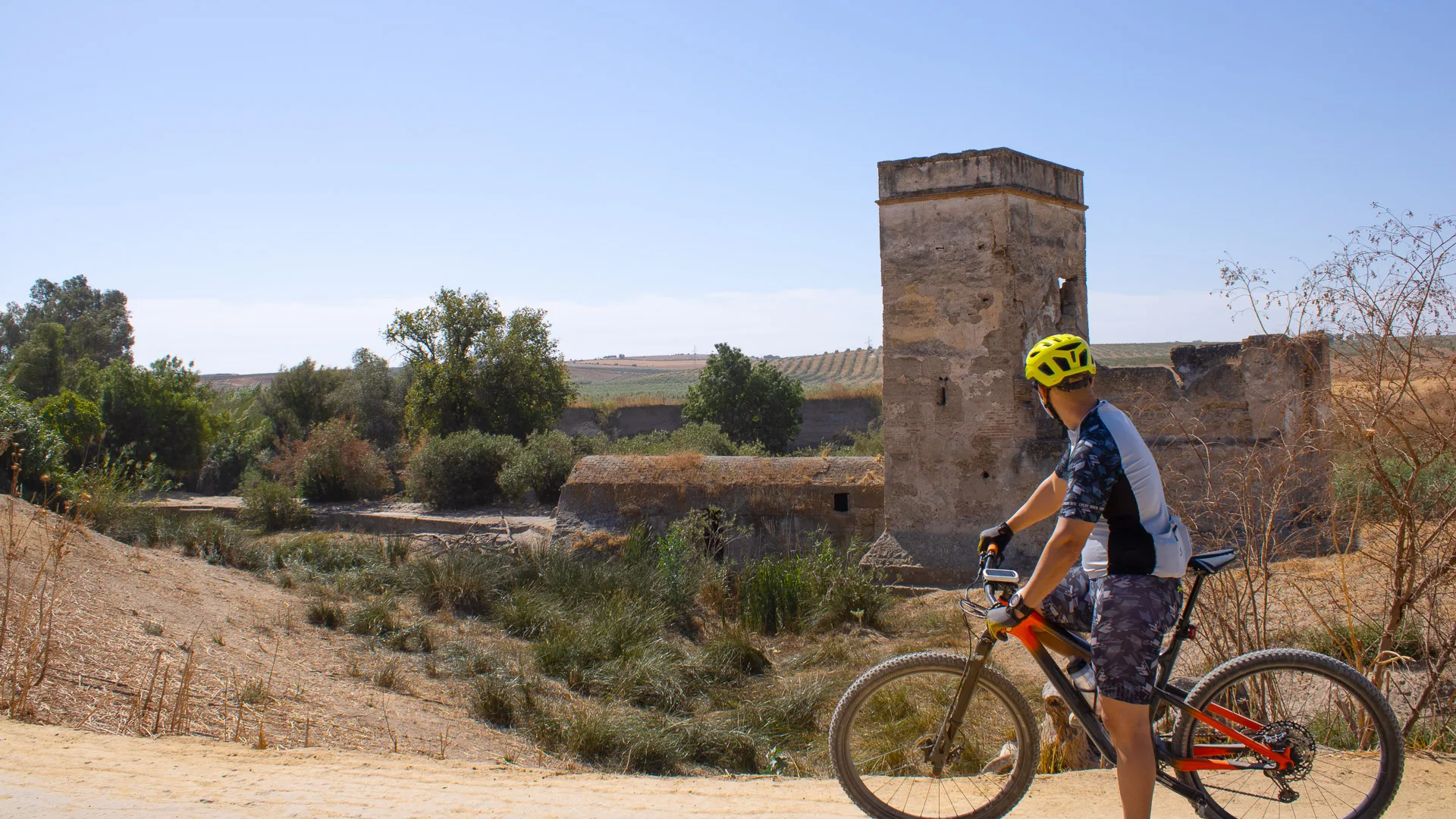
- La Ruta de los Molinos (Alcalá): A walk of about 4-5 km along the Guadaíra River, where you can admire the ancient fortified mills (such as the Algarrobo or Tapada Mill) immersed in a natural park.
- The Porticoes of Plaza del Pan (Seville): Behind the monumental Church of El Salvador, the elegant 19th-century arched structure still bears witness to the transition from medieval markets to modern commerce.
The history of the Bread Trail reminds us that behind every great product there is always a great history of territory, ingenuity and logistics. A value that, yesterday as today, makes the difference.
Retrace the Bread Trail on two wheels with ATD Bike Sevilla
Why just read the story when you can ride in it? The 15 kilometers separating the center of Seville from the river trails of Alcalá de Guadaíra represent the ideal distance for an active, sustainable excursion that goes beyond the usual tourist circuits.
Starting from the heart of Seville with the bicycles of ATD Bike Sevilla (collection point at Calle Alcalde Isacio Contreras 1), you can ideally retrace the ancient bakers’ route:
The perfect vehicle for any terrain: Whether you prefer an agile trekking bike to rack up miles on the plains or a comfortable e-bike to enjoy the views effortlessly, you’ll have overhauled vehicles suitable for both urban asphalt and dirt roads along the Guadaíra River.
Total freedom of exploration: With the flexible rental service, you can leave Seville in the morning, skirt the ancient access routes, explore the fortified mills of Alcalá on your own, stop to taste the real local pan de telera, and calmly return in the afternoon.
Whether you want to discover the historic center’s iconic monuments or venture along ancient trade routes like the bread route, our team is ready to put you in the saddle to transform a simple visit into an unforgettable experience.
Address: Calle Alcalde Isacio Contreras, 1, Seville
Website: www.atdspain.com
Instagram: @ATD.spain
TikTok: @ATD.spain

