
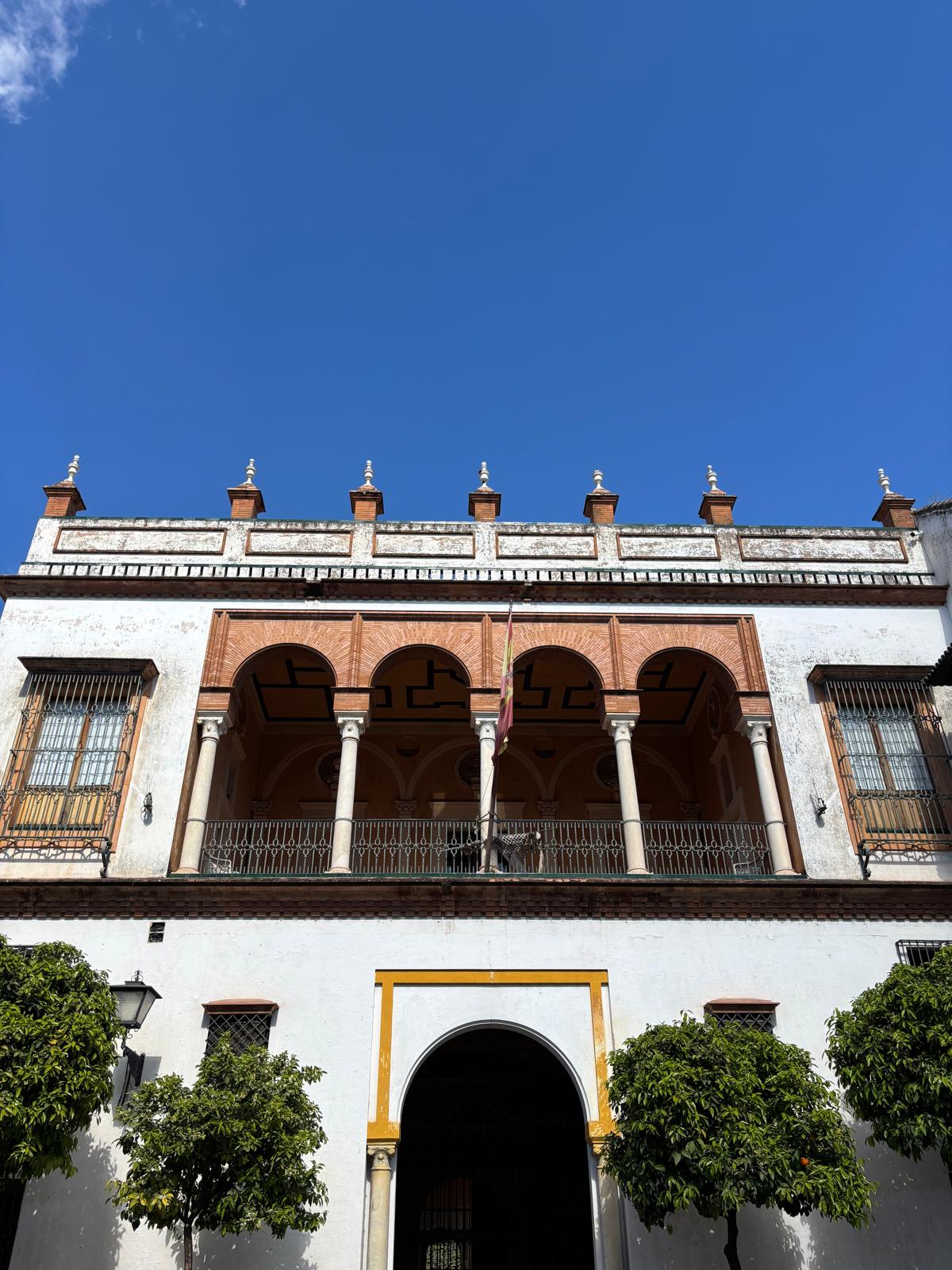
Seville is a city where history, art and architecture truly come together and can be seen on almost every street corner. Over the centuries, various cultures have left their mark on Seville, including the Romans, the Moorish, and the Christians. As a result, Seville’s art and architecture have become a true blend of different cultural styles. From Gothic cathedrals and Moorish palaces to modern buildings, Seville demonstrates how different centuries and cultural styles combine to create a unique cityscape.
Moorish influences
Moorish influences in Seville began in the year 711. In that year, the Islamic army invaded the Iberian Peninsula from North Africa, and shortly afterwards Seville became part of the Islamic empire. The Moors ultimately remained in Seville for around five centuries. During the period when the Moors were in Seville, they brought with them their own architecture, building techniques and art. So how can you recognize the Moorish style? Characteristic features of the style include horseshoe arches, geometric patterns, decorative stucco, and colorful tiles.
One of the most important examples of Moorish architecture in Seville is the Real Alcázar. This palace originally began as an Islamic fortress during the Moorish rule of Spain; it was later expanded and adapted by the Christian monarchs. This resulted in a unique blend of both styles.
Inside the palace, the richly decorated courtyards and halls are particularly striking. With colorful tiles, intricate stucco work and arches featuring elaborate patterns, this style is often described as Mudéjar. This is an art form that combines Islamic decoration with Christian architecture. The feeling of an oriental palace in the heart of Europe is created by the gardens with their fountains, orange trees and water channels.
Gothic architecture
Gothic is a style that originated in Europe during the Middle Ages; it is primarily associated with large churches and cathedrals. The characteristics of Gothic architecture include high arches, large stained-glass windows, tall towers, and plenty of light within the building. The aim of this architectural style was to convey a sense of grandeur and spirituality, which was achieved by making the building as large and impressive as possible.
One of the largest Gothic churches in the world is Seville Cathedral. The cathedral was built in the fifteenth century on the site of a former grand mosque. The famous Giralda tower was converted from a minaret into a bell tower. This makes the Giralda tower a fine example of how Islamic and Christian architecture come together in a single building. Inside the cathedral, you will see high vaults, richly decorated chapels, and impressive works of art. There is also another highlight: the tomb of Christopher Columbus is located here in the cathedral. This makes the cathedral not only a religious building but also an important historical monument.
Other architectural highlights
As well as the Real Alcázar and Seville Cathedral, Seville boasts other architectural highlights. Starting with the Plaza de España, this building was constructed for the 1929 Ibero-American Exposition. Plaza de España is a masterpiece of Andalusian regionalism, combining Renaissance and Mudejar influences. It is a semi-circular square featuring colorful ceramic tiles, bridges, and canals.
Another historic building, the Casa de Pilatos, also demonstrates how Moorish, Gothic and Renaissance styles come together; this can be seen, for example, in the Moorish arches and the classical courtyards. Together, these different styles create a unique example of Spanish architecture. The Casa de Pilatos has undergone several renovations, but its unique charm has always been preserved.
Finally, there is another hidden gem in the heart of the city: the Palacio de las Dueñas. This magnificent palace, with its rich history and impressive architecture, offers a unique insight into Andalusian culture. Here, too, you can see the blend of various influences, such as Gothic, Renaissance and Moorish. The Palacio de las Dueñas brings history back to life.
Modern architecture
Seville has a wealth of historic buildings, but the city is also seeing an increasing amount of modern architecture. The most striking example is undoubtedly the Metropol Parasol. The Metropol Parasol, also known as ‘Las Setas’, is a large wooden structure in the Plaza de la Encarnación. At the top of Las Setas there is a walkway, offering visitors a magnificent view over the rooftops of the city center. In this way, Seville demonstrates that tradition and modern architecture can coexist harmoniously.
Art and history come together
Many people see Seville as an open-air museum, as the city is home not only to impressive buildings but also to numerous museums, churches, and palaces. Here, architecture, sculpture and painting come together. From buildings with Moorish influences on modern designs, every building in Seville tells a different story about the city’s history.
It is the combination of all the styles, influences, art, and architecture that come together that makes Seville so special. The city’s history is still visible everywhere, yet the city continues to evolve. This ensures that Seville is not only a place with a rich history, but also a city where art and architecture are constantly growing and developing.
Would you like to see some of that historic or modern architecture and the different styles in person? During our daily bike tour, we’ll take you past the city’s highlights, including several buildings featuring different architectural styles. You’ll also learn fun and interesting facts about Seville. If you have any other questions, we’re more than happy to answer them. Whether that’s online or in our shop, we’re here to help!
Adres: Calle Alcalde Isacio Contreras, 1, Sevilla
Website: www.atdspain.com
Instagram: @ATD.spain
TikTok: @ATD.spain
Facebook: Andalucia Tours and Discovery

