
If there’s one week a year when Seville truly explodes with life, it’s during the Feria de Abril, or the April Fair. For one magical week, the city transforms into a swirling, singing, dancing festival of tradition, elegance, and joy.
It’s a time when flamenco isn’t just music—it’s a lifestyle. When people don’t just dress up—they wear works of art. And when the streets of Seville aren’t just streets anymore—they’re a giant open-air party that doesn’t stop until the sun comes up.
Let’s dive into the history, the sights, the sounds, and the unforgettable moments of this iconic Andalusian celebration.
A bit of history – From cattle to castanets
The Feria actually started in 1847 as a livestock fair—a place where local farmers came to buy and sell cattle. But Sevillanos (as the locals are called) have never been known for doing things halfway.
What began as a commercial gathering quickly became an excuse to bring food, music, and dancing to the mix. Tents were set up, guitars were played, and the fair started evolving into something much bigger: a celebration of Andalusian identity.
Today, the Feria is a carefully orchestrated tradition with its own dress code, etiquette, and schedule—but also pure fun and spontaneity.
Welcome to the Real de la Feria – A city within a city
The fair takes place on the southern edge of Seville, in a huge fairground known as the Real de la Feria. For one week, it becomes a city within a city, complete with streets, house numbers, restaurants, and even its own police and emergency services.
The area is covered with over 1,000 tents, called casetas, which are beautifully decorated and fully equipped with kitchens, bars, dance floors, and live music.
Each caseta is like a private club—most belong to families, companies, or social organizations. But don’t worry, there are always a few public casetas where tourists and newcomers are welcome to join the fun.
The grand opening – El alumbrado
The Feria kicks off with a bang on Monday night with the “Alumbrado”—when the entire fair is lit up in a dazzling display of lights.
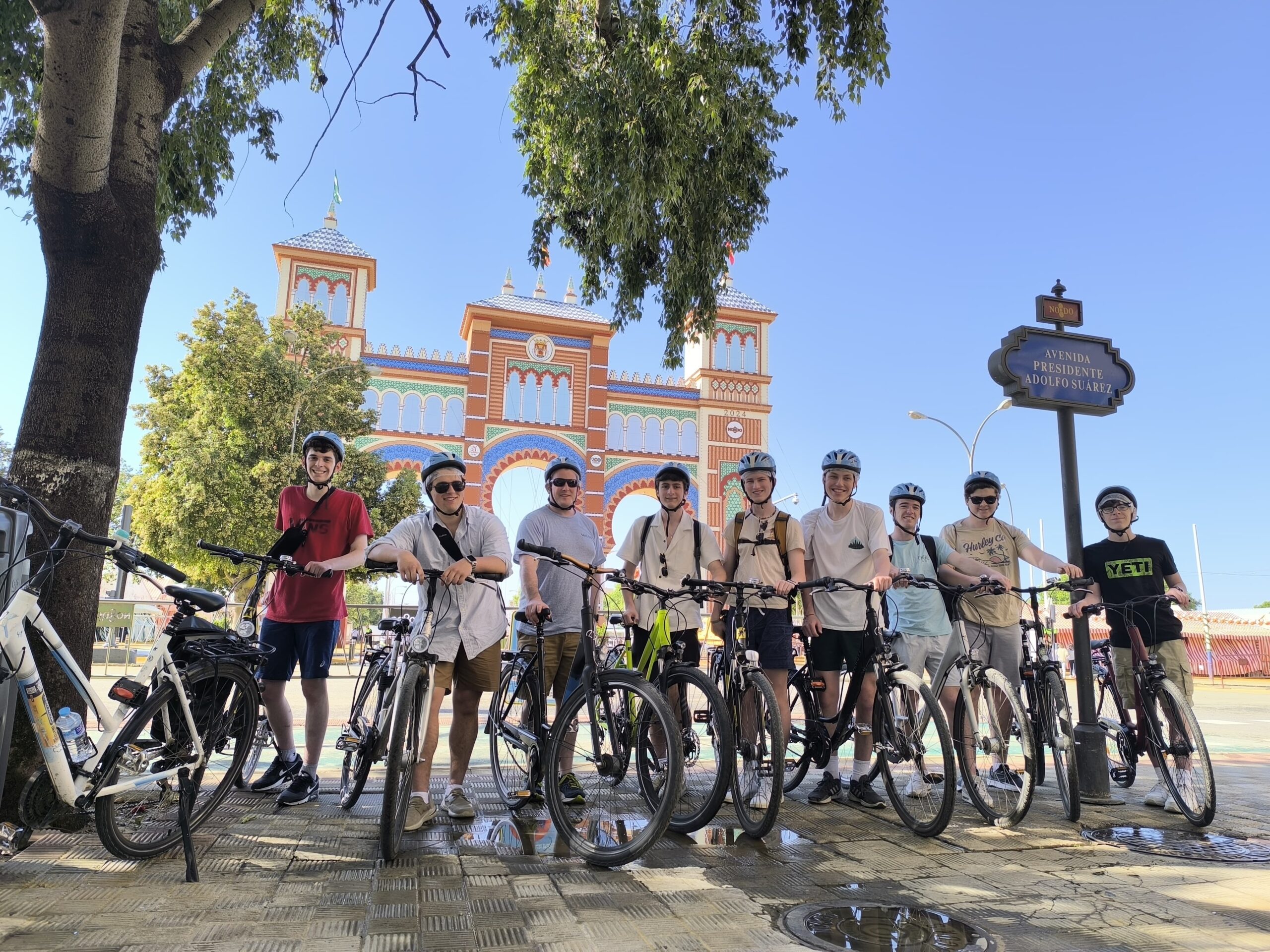
The most iconic moment? The flipping of the switch that turns on the main gate, or Portada, which is redesigned every year and made up of thousands of colorful bulbs.
This marks the official start of the fair… and the beginning of a week of little sleep and lots of dancing.
Daytime magic – Horses, carriages, and class
During the day, the Feria is surprisingly elegant. Families arrive at the fair in horse-drawn carriages, wearing traditional Andalusian outfits.
Men often wear traje corto, the classic short jacket and riding boots, while women glide through the streets in stunning flamenco dresses, called trajes de gitana. These dresses are usually custom-made and can cost hundreds—or even thousands—of euros.
This is not a costume party. It’s a cultural performance, and everyone is proud to play their part.
In the morning and early afternoon, you’ll see parades of riders and horses, and maybe even catch a glimpse of Seville’s high society having lunch inside the private casetas.
The heartbeat of the Feria – Sevillanas & flamenco
As the sun begins to set, the tempo picks up. Inside every caseta, live flamenco music fills the air—and people start dancing.
The dance of the Feria is called Sevillanas, a regional style of flamenco that’s joyful, rhythmic, and incredibly expressive. It’s danced in pairs, with set moves and patterns that locals learn from a young age.
Don’t worry if you don’t know how—it’s not about perfection. The goal is to have fun, let loose, and feel the rhythm of Seville in your bones.
Tapas & drinks – What to eat and drink?
No celebration is complete without food and drink—and the Feria delivers both in delicious, Andalusian style.
You’ll find traditional tapas like:
• Tortilla Española (Spanish omelet)
• Pescaito frito (fried fish)
• Jamón Ibérico (cured ham)
• Manchego cheese
• And of course, lots of olives and bread.
But the true star of the Feria is rebujito—a dangerously refreshing cocktail made of manzanilla sherry and Sprite, served with ice in tall glasses. It’s sweet, fizzy, and goes down far too easily in the spring heat.
Locals will warn you: “Rebujito starts as a friend… but don’t underestimate it.”
Calle del Infierno – Seville’s temporary theme park
Need a break from all the dancing? Head over to Calle del Infierno, or “Hell Street” – the Feria’s amusement park.
It’s packed with roller coasters, candy stalls, bumper cars, and loud music—perfect for kids or anyone young at heart. And yes, it’s open late into the night.
Nightlife at the feria – Party until dawn
As the night deepens, the Feria changes its rhythm. The elegant horses go home, the flamenco dresses twirl faster, and the music gets louder.
People dance until 5 or 6 in the morning, then go home, rest for a few hours, and come right back. For one week, sleep becomes optional—and joy is mandatory.
Tips for first-time visitors:
• Dress up if you can – it’s part of the fun, and you’ll feel more included.
• Try to go with a local friend who can get you into a private caseta.
• Don’t forget to hydrate (and not just with rebujito).
• Bring cash – many casetas don’t accept cards.
• Go at least twice – once during the day for the horses, and once at night for the party.
In a few words…
The Feria de Abril is not just a fair—it’s a feeling. A week where tradition, community, and celebration come together in the most vibrant way imaginable.
Whether you go to dance, to eat, to people-watch, or just to experience the energy of Seville at its brightest, one thing is certain: you’ll never forget it.

