
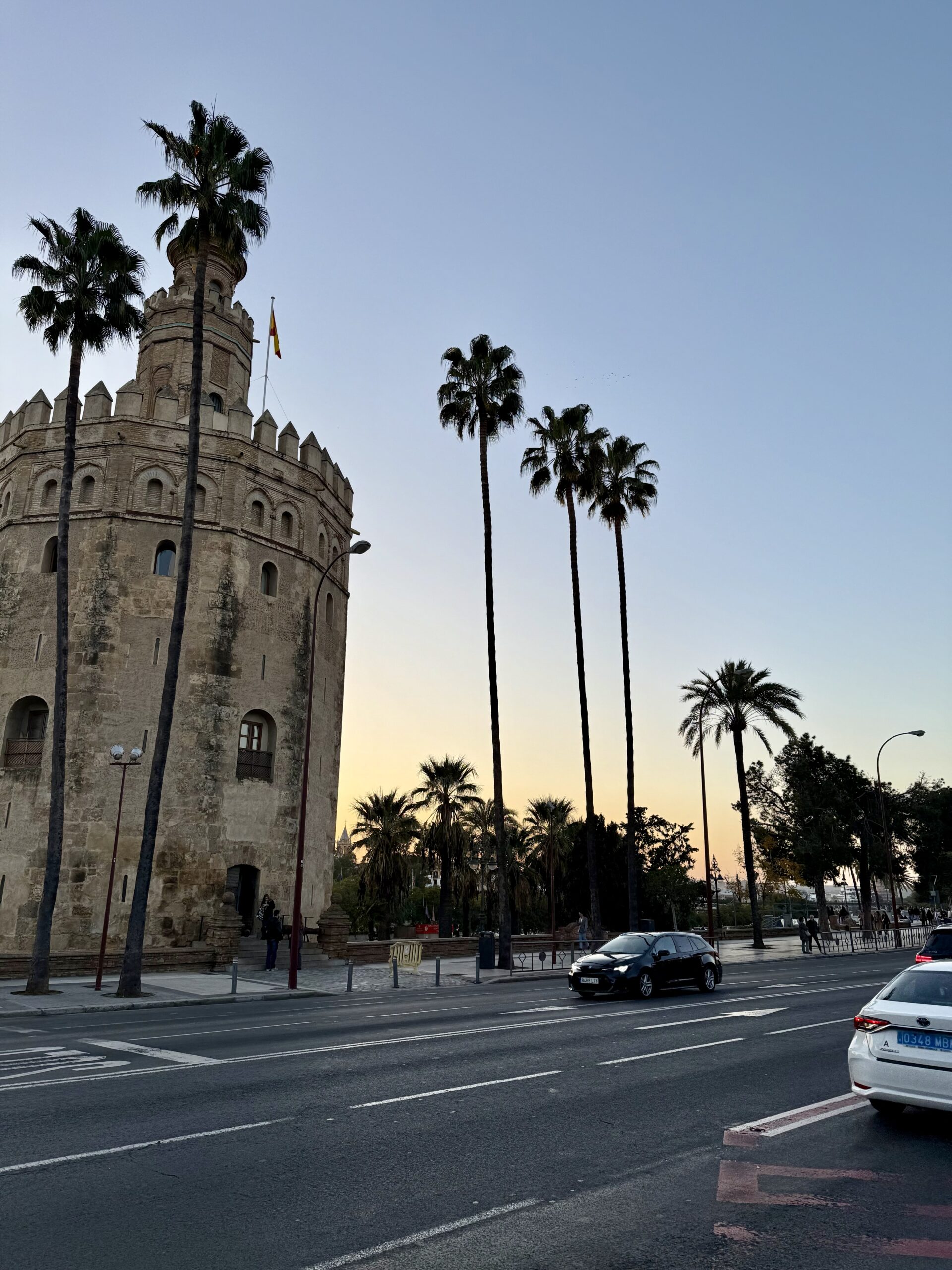
When you walk along the Guadalquivir River in Seville, there’s one structure that immediately draws your attention: a round, golden-toned tower standing quietly by the riverside. This is the Torre del Oro — the Golden Tower.
It’s one of the city’s most iconic landmarks. And although its name sounds like something from a fairytale, the real story behind the tower is rooted in Seville’s long, layered, and fascinating history.
A little background: What Is the golden tower?
The Torre del Oro is a 13th-century military watchtower built during the time of Almohad rule, when much of southern Spain was under Muslim control. Its Arabic name was “Borg al-Dahab,” which literally means “Tower of Gold.”
Despite what the name suggests, there was never any gold kept inside the building. The golden color comes from the way the sun reflects off the materials used in construction — mainly mortar, lime, and possibly a mix of straw — giving the tower its warm, yellowish glow, especially at sunset. This reflective quality is what likely inspired its romantic nickname.
A clever defense system
The tower was originally part of Seville’s riverfront fortifications. Back in the 13th century, the Guadalquivir River played a crucial role in the city’s trade and defense. The tower was positioned to control access to the river and to guard the port.
One of the most interesting features of the defense system was a massive chain that stretched from the Torre del Oro across the river to the opposite bank in Triana. This chain could be raised to block enemy ships from passing through the river — a smart and practical method of protection at the time.
Its position near the water gave it a strategic advantage: it could monitor ships, spot enemies, and communicate alerts across the city’s defensive network.
A tower with many lives
Like most historical buildings, the Golden Tower has gone through many transformations. Originally, it served a purely military purpose. But over time, as the city grew and its needs changed, the tower was repurposed several times.
It has been used as:
• A military watchtower
• A prison for noble captives
• A small chapel
• A storage place for river charts and navigation tools
• And today, a maritime museum
Its current height is about 36 meters, but it wasn’t always that tall. The third level — which gives the tower its final shape — was added in the 18th century, long after its original construction.
A symbol of Seville’s golden age
During the 15th and 16th centuries, Spain entered what is known as its Golden Age — a time of global exploration, overseas conquests, and immense wealth. Seville became one of the most important cities in Europe thanks to its exclusive rights to trade with the Americas.
Ships filled with gold, silver, and exotic goods would dock in Seville, making the city a major hub for international trade. The Torre del Oro stood silently by the riverside, watching as treasure-laden ships came and went.
There’s a long-standing legend that gold brought back from the Americas was stored in the Torre del Oro, but there’s no solid evidence to support this. Still, it’s a story that adds to the tower’s mystique and makes it even more intriguing.
The tower today: Museum and lookout point
Nowadays, the Torre del Oro houses a small but interesting maritime museum. Inside, visitors can find:
• Historical naval maps
• Detailed ship models
• Exhibitions on Spanish maritime history
• Artifacts from the Age of Exploration
What many visitors enjoy most is the opportunity to climb to the top of the tower. From there, you get a panoramic view of Seville. You can spot landmarks like the Giralda, the Alcázar, and the Triana Bridge. It’s a peaceful spot to take in the city’s skyline while standing in a place filled with centuries of history.
Why visit the torre del oro?
Besides its historical importance, the Torre del Oro is simply a beautiful spot to visit. Its riverside location makes it ideal for a relaxing stroll, especially during the golden hour, when the sunlight gives the tower an extra magical glow.
It’s also close to many other attractions. Whether you’re walking toward Triana for tapas, heading to the cathedral, or exploring the nearby Torre de la Plata (Silver Tower), the Torre del Oro is a natural stop on any walking tour of the city.
Practical information
• Location: Paseo de Cristóbal Colón, right by the Guadalquivir River
• Opening hours: Usually open from 9:30 AM to 6:45 PM (closed on holidays)
• Entry price: Just a few euros, and sometimes free on certain days
• Recommended visit time: About 30–45 minutes
• Best time to visit: Late afternoon, especially for photos
Final thoughts
The Golden Tower may not hold treasure in the traditional sense, but it’s definitely rich in stories. It’s one of those places that connects the past with the present — from its military beginnings to its current role as a museum and scenic lookout.
Whether you’re a history lover, a casual tourist, or someone who just wants a great photo by the river, the Torre del Oro is worth your time. It’s a quiet reminder of Seville’s proud, adventurous past — a city that has always faced the world through its river, and continues to shine, just like the tower itself. We also pass this special tower with our bike tours, so will you join us?


Youre so cool! I dont suppose Ive read anything like this before. So good to find anyone with some unique thoughts on this subject. realy thanks for beginning this up. this website is something that is needed on the net, someone with a little bit originality. useful job for bringing something new to the web!
Hello there, You have performed an excellent job. I’ll definitely digg it and personally recommend to my friends. I’m sure they will be benefited from this web site.
Good day! Do you use Twitter? I’d like to follow you if that would be ok. I’m definitely enjoying your blog and look forward to new updates.