
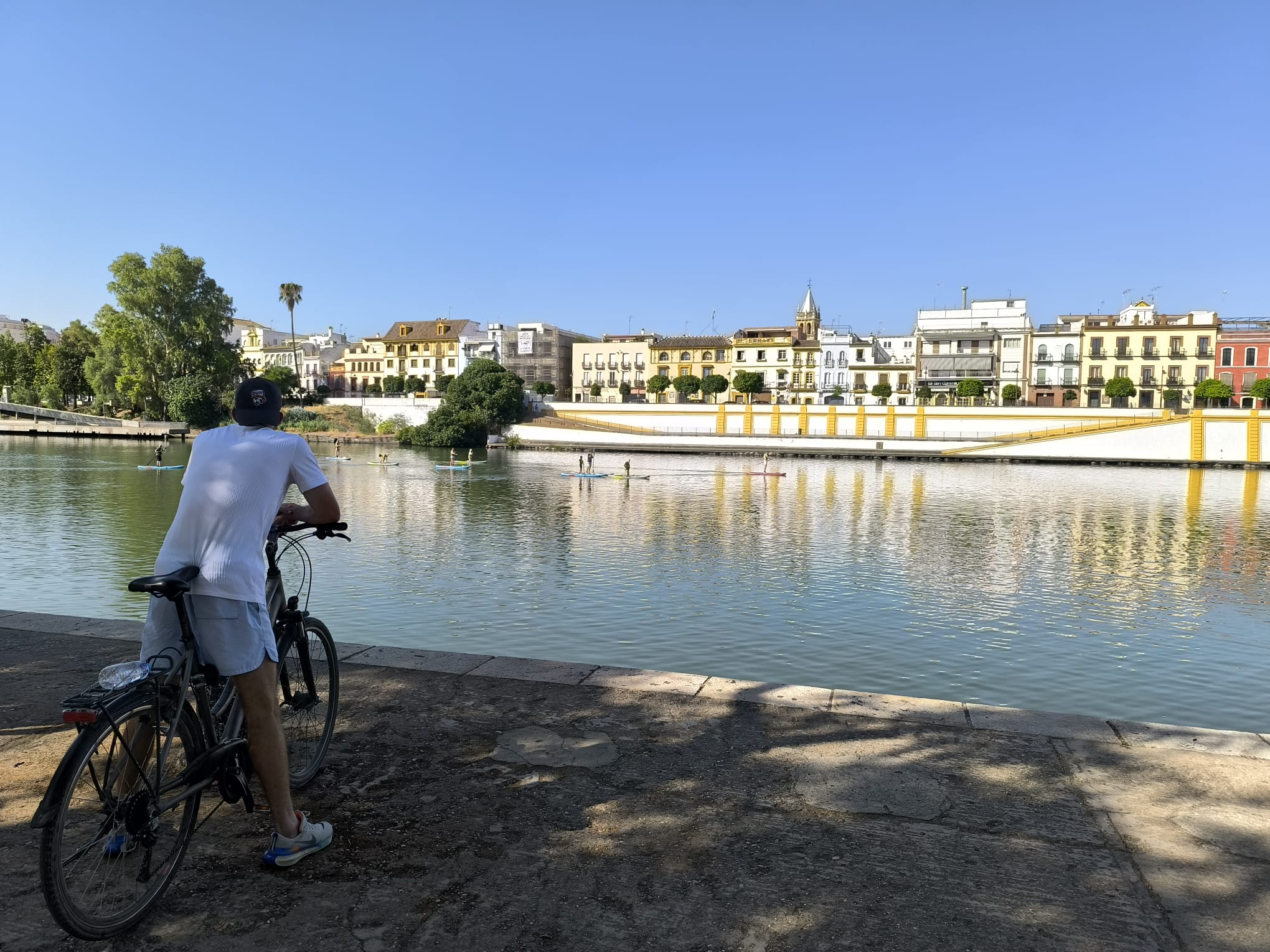
When people visit Seville, they often think immediately of the magnificent cathedral, the impressive Real Alcázar or the lively Plaza de España. But what many do not know is that this city also hides stories and secrets that go much further back in time, even before the Romans and the Moors. One of those mysterious stories is that of the Gulf of Tartessos, a legendary place that, according to many historians and archaeologists, once existed near Seville. Tartessos is often described as a kind of “lost civilization” or even an “Atlantis of Spain.” It was a wealthy and powerful society that existed around three thousand years ago, but of which very little tangible or visible evidence has been found. According to ancient Greek writers, Tartessos lay somewhere in the south of Spain, near the mouth of the Guadalquivir River, which flows right through Seville. The river and its delta would at that time have opened into a vast inland sea or gulf: the Gulf of Tartessos. This mysterious water landscape was an important place for trade, culture and the exchange of ideas between different peoples. What makes these stories so special is that they give Seville a very different face. The city we now know as a center of art, flamenco and tapas also has a past that goes back to the earliest civilizations of Europe. Walking through the city, it is almost unimaginable that ships once sailed here from a civilization that has nearly disappeared from history. Yet many researchers believe that Seville and its surroundings hold the key to solving this ancient mystery.
What was Tartessos actually?
Tartessos was a rich, prosperous and ancient civilization that flourished in the south of Spain between the 9th and 6th centuries BC. The people were famous for their wealth, especially in the trade of silver, gold, copper and tin. They maintained close contacts with other great civilizations such as the Phoenicians and the Greeks. Many Greek writers, including Herodotus, described Tartessos as a land of luxury, wealth and mysterious customs. Yet today Tartessos remains one of history’s great puzzles. Few tangible remains of this civilization have been discovered, which is why historians often compare it to the mythical city of Atlantis. Was it truly a kingdom of immense wealth, or have the stories been exaggerated over time? That is exactly the question that makes Seville and the Gulf of Tartessos so interesting for researchers and travelers alike.
The role of the Guadalquivir River
The Guadalquivir River is already an impressive sight in Seville today, but thousands of years ago this river probably played an even bigger role in shaping the city and its surroundings. In antiquity, the river was much wider and deeper than it is now, and the delta at its mouth into the Atlantic Ocean may have formed a kind of inland sea or lagoon: the Gulf of Tartessos. This body of water would have been ideal for traders arriving with their ships from distant lands. The river connected the interior of Spain with the Atlantic coast, making it a vital route for the transport of metals such as silver, gold and copper, mined in the mountains of Andalusia. Traders from Phoenicia, Greece and even possibly North Africa could use the Gulf of Tartessos and the Guadalquivir to exchange their goods for these precious metals. Thus, the area around Seville grew into a hub of international trade, culture and exchange. The river was not only economically important but also culturally and strategically significant. For the people of Tartessos, the water was a source of life, providing fertile land for farming and a safe place to settle. Where Seville’s historic center now stands, there must once have been a vibrant region where different cultures met.
Why the Gulf of Tartessos is so fascinating
What makes the Gulf of Tartessos so remarkable is that it was one of the first places in Europe where international trade and cultural exchange took place on such a large scale. In a time when many regions still lived in isolation, this was a place where ships full of goods, stories and ideas converged. It is no coincidence that ancient writers described Tartessos as a wealthy and powerful land. For Seville, this past is particularly important, because it shows that the city has always played a central role in the history of trade and discovery. While Seville became world-famous in the 16th century as the gateway to the Americas, thousands of years earlier it was already a meeting point between Europe, Africa and the Mediterranean world. The Gulf of Tartessos also fires the imagination. The idea of a vanished sea that was once alive with trade and culture sparks curiosity and questions. Where exactly was this sea? What did it look like? And what happened that caused it to disappear? It is this mix of fact and mystery that makes the story so captivating.
Archaeological discoveries and research
The enigma of Tartessos has intrigued archaeologists for decades. Although no conclusive evidence has yet been found to pinpoint the exact location of the Gulf of Tartessos, there are important clues. In the area around Huelva and along the Guadalquivir, remains of settlements, tombs and artifacts have been found that point to a wealthy and well-organized society. One of the most impressive discoveries is the so-called “Treasure of El Carambolo,” unearthed in 1958 near Seville. This collection of golden jewelry is thought to be linked to Tartessian culture. Such finds show that Tartessos may not be a myth, but rather a real civilization with wealth, power and creativity. Archaeologists now use modern techniques, such as satellite imagery and geological studies, to trace ancient waterways and settlements. Increasingly, studies suggest that there really was a large lagoon or sea-like environment at the mouth of the Guadalquivir, which strengthens the case for the Gulf of Tartessos. Visitors to Seville can explore this history not just through books but by seeing it firsthand. The Archaeological Museum of Seville exhibits many of these findings, giving you a direct link to the mysterious civilization that once lived in this region.
What can you see today in Seville?
Although the Gulf of Tartessos itself has vanished, you can still discover traces of this rich past in Seville. A walk along the banks of the Guadalquivir is a wonderful way to imagine how important this river has always been. Especially near the Torre del Oro, an ancient watchtower on the river, you can feel how Seville has always been connected with water and the wider world. Several museums also help you learn more about Tartessos culture. The Archaeological Museum of Seville in Maria Luisa Park is highly recommended. Here you can see artifacts from the Tartessian period, such as ceramics, jewelry and weapons. These objects offer insights into how people lived in that era and how rich their culture was. Temporary exhibitions in Seville and other Andalusian cities also regularly focus on Tartessos and the myths surrounding the Gulf of Tartessos. For history enthusiasts, this is a unique opportunity to better understand the mysteries of this ancient civilization.
Tartessos and the myth of Atlantis
One of the most exciting aspects of Tartessos is its comparison to Atlantis. Plato described Atlantis as a wealthy and powerful society that eventually perished in a natural disaster. Many researchers have wondered whether he may have been referring to Tartessos. The similarities are striking: both civilizations were rich in metals, located in or near the ocean, and disappeared mysteriously from history. This makes the Gulf of Tartessos especially fascinating. The idea that Seville and Andalusia may once have been the stage for a civilization that inspired one of the world’s most famous myths adds an extra dimension to the region. For travelers, this means that visiting Seville is not only about enjoying its magnificent heritage but also about connecting with a place that may have played a crucial role in the oldest stories of Western civilization.
Come ride with us
If this story and the Gulf of Tartessos spark your interest, or if you are simply in love with the beautiful city of Seville, then book a fun tour with us. As the high season begins, spots are filling up fast, and it is getting more popular every day. Make sure to secure your place soon, and one of our amazing guides will give you an unforgettable experience in our old, beloved and vibrant city, Seville.
Contact:
Address: Calle Alcalde Isacio Contreras 1, Seville
Website: www.atdspain.com
Instagram: @atd.spain
TikTok: @ATD.spain
Facebook: Andalucia Tours and Discovery

