
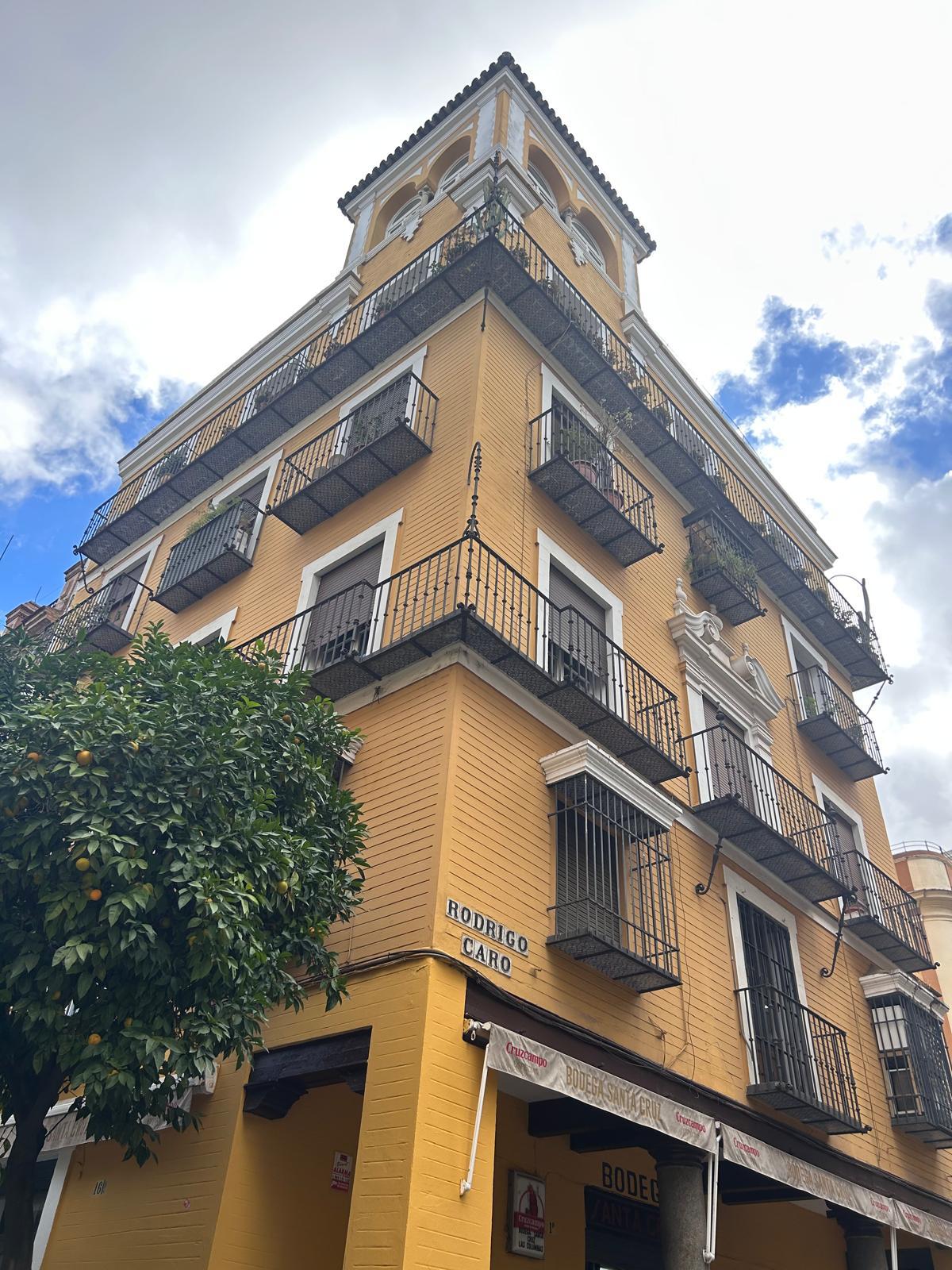
There is a color that accompanies every single pedal stroke through Seville. It is not just a simple yellow, nor merely an architectural detail: in Spain, it is called amarillo albero, and it is the very soul of the city, from the ground beneath your wheels to the facades of its most iconic monuments. Those who choose to explore Seville by bicycle come into direct contact with this warm, vibrant shade. But what is the hidden story behind the stone that painted the Andalusian capital, and why does it make every two-wheeled itinerary so unique?
A SEABED BENEATH OUR WHEELS
Albero is not a synthetic paint, but a natural rock born 5 to 6 million years ago, when the ocean covered the entire Guadalquivir valley. As the sea retreated, sand, seashells, and fossils compacted together, giving rise to this limestone in the hills of Los Alcores, just a few kilometers from Seville. What gives it such a golden hue is goethite, a natural iron oxide that makes it glow under the Andalusian sun.
From the Earth to the Facades: Why Seville is Painted Gold
Pedaling along our routes, you encounter albero everywhere, both as a pigment on the walls and as natural paving:
The avenues of historic parks. Ground into fine, compacted sand, this rock has extraordinary drainage capacity and does not kick up dust. That is why it covers the avenues of María Luisa Park, the bullring of the Real Maestranza, and the grounds of the Feria de Abril. Riding along these paths literally means crossing an ancient prehistoric beach. The architecture of 1929: until the early twentieth century, Seville was a predominantly white city. Ahead of the Ibero-American Exposition of 1929, architects chose this natural, affordable pigment extracted from local quarries to replace the dazzling white, giving palaces and squares a warm, welcoming, and monumental visual harmony.
ICONIC PALACES AND THEIR SHADES
Amarillo albero is never quite the same: it reacts to sunlight and transforms Seville’s palaces hour after hour. Early in the morning, with the first low rays of sun, it takes on soft, almost creamy and slightly pinkish tones, wrapping the squares in a calm atmosphere. At midday, under the full Andalusian sun, it bursts into a bright, vibrant ochre yellow that enhances the contrast with lime white, carmine red, and the deep green of the orange trees, before turning into a deep, amber gold at sunset that sets historic facades and park sands aglow.
This continuous play of light comes to life on the walls of the city’s most iconic buildings, where albero yellow is often paired with carmine red. You can admire it on the monumental Baroque facade of the Palacio de San Telmo and among the flower-filled courtyards of the Palacio de las Dueñas, as well as along the historic walls of the Real Alcázar and in the narrow alleys of the Barrio de Santa Cruz. The same color also dresses the exterior and the sand of the arena at the Plaza de Toros de la Real Maestranza, all the way to the Arco and Basilica de la Macarena, illuminating both noble architecture and the ancient gates of the city.
The bicycle is the ideal way to admire these palaces and witness their transformations firsthand. Pedaling unhurriedly and sustainably along tree-lined avenues and monumental squares, you can stop at the best spots to observe up close how light shapes Seville at every moment of the day.
MORE THAN A COLOR: THE AUTHENTIC SPIRIT OF SEVILLE
For those who live here, amarillo albero goes far beyond architecture and geology: it is the daily reflection of the Sevillian character—sunny, open, and deeply connected to its roots. This golden yellow accompanies the most intimate and convivial moments of city life, from long chats in the cool shade of flower-filled patios to the sound of water flowing in hidden fountains, as well as Sunday strolls along the avenues of María Luisa Park. It is the very same earth that rises gently into the air during the Feria de Abril, when thousands of people gather on the streets of the Real to dance sevillanas and share the joy of being together, or that provides a solemn backdrop to the passing of brotherhoods during Semana Santa.
Ultimately, understanding amarillo albero means understanding the true soul of Andalusia: a land that knows how to transform a simple ancient stone into light, hospitality, and shared beauty. Exploring Seville by bicycle allows you to immediately tune into this genuine rhythm, leaving haste behind to let yourself be embraced by the same warmth that has captivated travelers, artists, and locals for centuries. Once you return home, that golden glow will be the most vivid memory you take back with you.

