
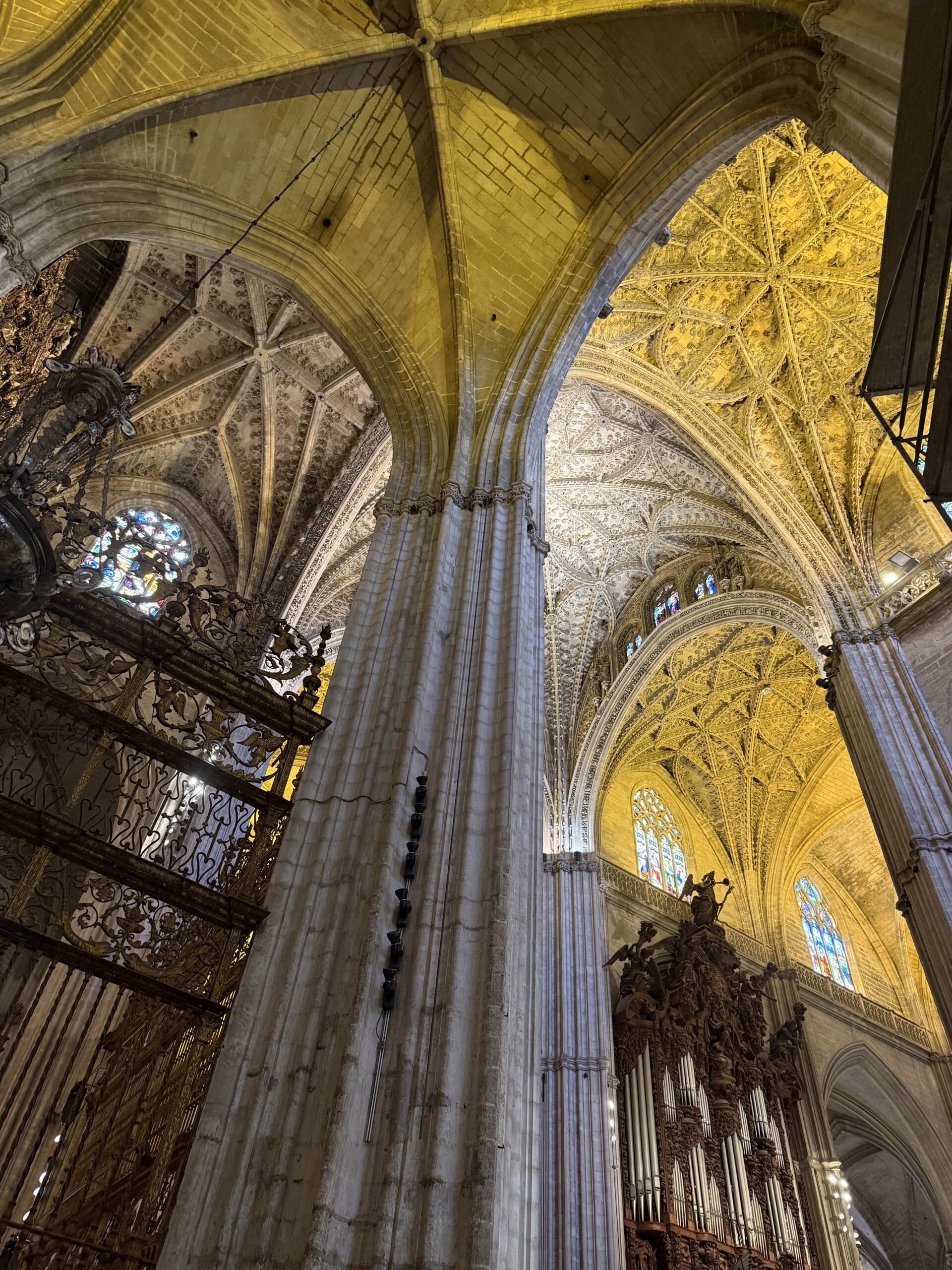
If you’ve ever walked through Seville’s grand cathedral or wandered past statues of kings without knowing who they were, the Day of San Fernando is the perfect time to discover one of the city’s most important historical figures. Known officially as King Ferdinand III of Castile, San Fernando is more than just a name in the history books: he’s a central figure in Seville’s identity, honored every year on May 30th.
Who was San Fernando?
San Fernando was the king who conquered Seville in 1248, ending centuries of Muslim rule and integrating the city into the Christian Kingdom of Castile. But unlike many conquerors, his legacy wasn’t only built on warfare. He was deeply religious, known for his fairness and compassion, and respected for his efforts to protect people of all faiths (Christian, Muslim, and Jewish) within his kingdom.
Because of his piety and leadership, Ferdinand III was canonized as a saint in 1671. His sainthood solidified his importance not only as a king but also as a spiritual figure. Today, he remains both a political and religious symbol for the city. His name appears on street signs, schools, and historical plaques throughout Seville, and his story is passed down from generation to generation.
A special day in Seville
Every year on May 30, the city of Seville celebrates El Día de San Fernando, or the Day of Saint Ferdinand. While it’s not an official public holiday, it holds significant meaning for locals who recognize the lasting impact this king had on their city.
The main event takes place in the Cathedral of Seville, where San Fernando’s tomb is opened to the public, something that only happens once a year. His body usually rests inside a silver and glass casket, enclosed behind a decorative gate in a private chapel. But on this day, the casket is visible up close, and visitors can approach to pay their respects.
The opening usually happens in the early morning, typically between 8:30 am and 10:30 am, but the exact schedule can vary slightly each year. It’s a good idea to check the cathedral’s announcements or local news a few days in advance. Many people arrive early, and although there may be a line, the atmosphere is quiet and respectful. Locals light candles, offer flowers, and sometimes stop for a silent prayer in front of the king who once ruled their city.
Inside the chapel, you’ll notice beautiful decorations, including religious symbols, the city’s coat of arms, and sometimes traditional music played softly in the background. It’s a powerful and emotional moment for many Sevillanos — a mix of pride, history, and spirituality all in one place.
A quiet but proud celebration
While the Day of San Fernando doesn’t come with street parades or public festivities, the sense of pride is strong. Many churches around the city offer special masses in his honor. Schools may organize history lessons about his reign, and cultural groups often host lectures or exhibitions to highlight his achievements.
If you take a closer look at Seville’s city symbol, the letters “NO8DO,” you’ll also find a connection to San Fernando. The figure 8 represents a skein of wool (madeja in Spanish), and the phrase reads “No me ha dejado,” or “She (Seville) has not abandoned me.” Legend has it that San Fernando coined this phrase during a difficult moment in his reign, and the motto has since become a permanent part of the city’s identity.
Where else can you find San Fernando?
You don’t have to wait for May 30 to explore San Fernando’s legacy — it’s everywhere in Seville. The Puerta de San Fernando, one of the former city gates, is named after him. So is the Hospital de San Fernando and numerous streets and plazas. You can also visit the Royal Alcázar, which San Fernando helped develop into a royal residence after the conquest.
But perhaps the most iconic tribute to him stands in Plaza Nueva, just steps away from Seville’s City Hall. There, a bronze equestrian statue of San Fernando rises above the square. He’s shown in full armor, holding a sword, facing toward the cathedral — as if still guarding the city he once reclaimed. At the base of the statue, you’ll see detailed sculptures, including skulls, which symbolize the fallen enemies from the city’s conquest, reminding us of the cost of war and the depth of his victory.
The statue is a common meeting point for locals and a popular photo spot for tourists. Around it, street performers play flamenco, children run through the square, and the rhythm of modern Seville pulses around this silent yet powerful figure from the past.
A walk through time
Whether you’re passionate about history or just curious about the city’s roots, the Day of San Fernando offers a rare opportunity to connect with the deeper layers of Seville’s cultural identity. From a young king who led with faith and strategy to a saint whose legacy has lasted nearly eight centuries, San Fernando remains a timeless symbol of unity, strength, and transformation.
And the best part? You don’t have to wait for a specific day to experience his story. On our bike tours through Seville, we pass right by the statue of San Fernando in Plaza Nueva. As we pause there, you’ll hear the full story of his conquest, his values, and his role in shaping the Seville we know today.
It’s more than just a stop on the route — it’s a chance to stand beside history, right where it happened.

