
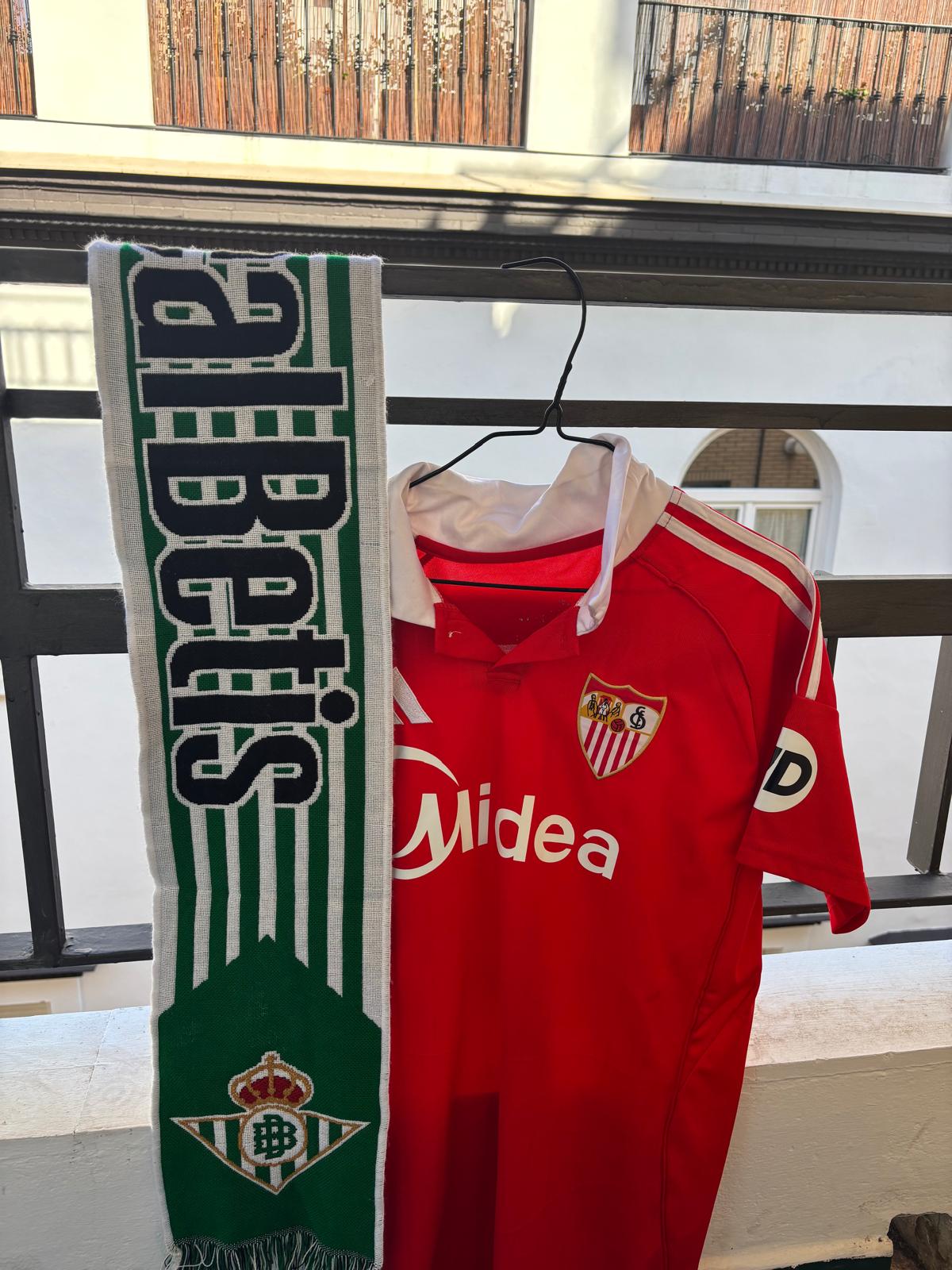
When you think of Seville, you think of flamenco, sunshine, oranges, and passion ,but for many in the city, passion means one thing above all: football. In the Andalusian capital, daily life is deeply influenced by the eternal battle between two clubs: Sevilla FC and Real Betis Balompié. This rivalry, known as El Gran Derbi, is not just a sporting contest; it’s a clash of identities, neighborhoods, social classes, and emotions that has lasted for more than a century.
The Origin of Two Proud Clubs
The roots of these two clubs go back to the early twentieth century, a time when football was gradually gaining ground in Spain. Sevilla FC was founded in 1890 (though officially re-established in 1905) by mainly British merchants and members of Seville’s upper middle class. The club quickly gained a reputation for elegance and prestige. It’s a club that stood for tradition, organization, and stability. The colors red and white symbolize strength and purity, and to this day Sevilla FC is seen as the club of the establishment. Their stadium, the Estadio Ramón Sánchez-Pizjuán, is located in the Nervión district, a modern and lively part of the city.
Real Betis Balompié, on the other hand, was founded in 1907 (officially merged in 1914) by workers and students who wanted to distinguish themselves from the elite club Sevilla FC. The name “Balompié” is a Spanish translation of “football,” and the addition of “Real” came later when King Alfonso XIII granted them the royal title in 1914. Betis grew into the club of the people, the team of the everyday Sevillian. Their supporters, the béticos, are deeply rooted in the working-class neighborhoods of the city, especially in the south, around Heliópolis, where their stadium, the Estadio Benito Villamarín, stands. The green and white colors symbolize hope and purity, but also a strong connection with Andalusia itself, as the region’s flag bears the same colors.
Two Clubs, Two Identities
What makes this rivalry so unique is that it goes far beyond football. It represents a clash of lifestyles, backgrounds, and even worldviews. Sevilla FC is often seen as the “more serious” club; organized, ambitious, and focused on success. Their supporters take pride in the club’s European achievements, with multiple UEFA Europa League titles that have brought international recognition. Real Betis, on the other hand, is the club of the heart and emotion, loyalty, and perseverance. Their motto, “Viva el Betis manque pierda” (“Long live Betis, even if they lose”), says it all: for béticos, love for the club is unconditional, regardless of the score.
The division of the city is still tangible. In many Sevillian families, you’ll find both Sevilla and Betis fans under the same roof, which can lead to lively arguments during derby weeks. Traditionally, Betis was seen as the club of the working class, while Sevilla FC had a larger following among the middle and upper classes. Over time, however, that difference has faded. Today, both clubs boast fans from all walks of life, and both groups of supporters are equally passionate.
The History of the Rivalry
The rivalry began early, around 1915, when the two clubs first faced each other. In the early days of Spanish football, matches were often fierce, marked by rough tackles, arguments, and even pitch invasions. The first decades were mostly symbolic: Sevilla FC was the more successful, better organized team, while Betis was seen as the brave underdog.
In 1935, Betis made history by winning the Spanish championship, something Sevilla FC had not yet achieved at the time. It was a huge blow for their rivals and gave Betis a permanent place in Spanish football history. Sevilla FC, however, struck back after the Spanish Civil War, winning their own league title in 1946. Throughout the second half of the twentieth century, both clubs grew steadily, but Sevilla FC generally remained more successful at the national level. Betis had moments of glory, such as winning the Copa del Rey in 1977 and again in 2005, while Sevilla FC entered a golden era from 2006 onwards, with multiple European triumphs, including six UEFA Europa League titles.
The Derby: More Than Just a Match
When El Gran Derbi appears on the calendar, Seville transforms into a city completely consumed by football. For days, cafés, markets, and plazas buzz with conversations about lineups, referees, and predictions. The atmosphere is electric: flags, scarves, and graffiti in red, white, green, and white fill every corner. Even the air seems to vibrate with anticipation. The matches themselves are intense and emotional. Unlike El Clásico between Real Madrid and FC Barcelona, which often revolves around prestige and politics, El Gran Derbi is mainly about pride and identity. Though the rivalry has occasionally led to incidents, in recent years there has been a stronger focus on sportsmanship and mutual respect. Still, the tension remains until the final whistle.
Who Is Better? Statistics and Emotion
Looking purely at the statistics, Sevilla FC has historically won more matches than Betis. In La Liga, Sevilla FC usually finishes higher in the standings. However, Betis remains dangerous, especially in derbies. These matches are unpredictable, and Betis has often surprised by defeating their rivals even in seasons when they were lower in the table. When it comes to popularity, it’s hard to name a clear winner. Some surveys suggest Betis has a slightly larger fanbase within Seville itself, likely due to their “club of the people” image, while Sevilla FC enjoys greater international recognition thanks to its European successes.
The Modern Rivalry
In the 21st century, both clubs have entered a new era. Sevilla FC has established itself as a consistent force in European football, known for its professionalism and strong management. Real Betis, meanwhile, has reinvented itself as a charismatic and creative club that stands for beautiful football and a deep local identity. Under coach Manuel Pellegrini, Betis has returned to European competition and even won the Copa del Rey again in 2022, an emotional triumph for all béticos.
Today, the rivalry remains fierce but filled with mutual respect. Players from both teams often know each other personally, and fans share neighborhoods, workplaces, and daily life. Yet, during derby week, everything seems to stop; work, traffic, and time itself, until the final whistle blows.
The Meaning of the Derby for Seville The rivalry between Sevilla FC and Real Betis goes beyond football. It reflects the soul of Seville itself: full of color, contrast, and emotion. Seville is a city where tradition and modernity coexist, where pride and passion can be felt in every street. Whether you wear red and white or green and white, the derby is a shared celebration of identity, community, and love for the city. In Seville, you don’t just say you love football; you choose a side, and you do it with your heart. El Gran Derbi is not just a game; it’s a story that has been told for over a hundred years, with new heroes, new emotions, and the same unbreakable passion.

