
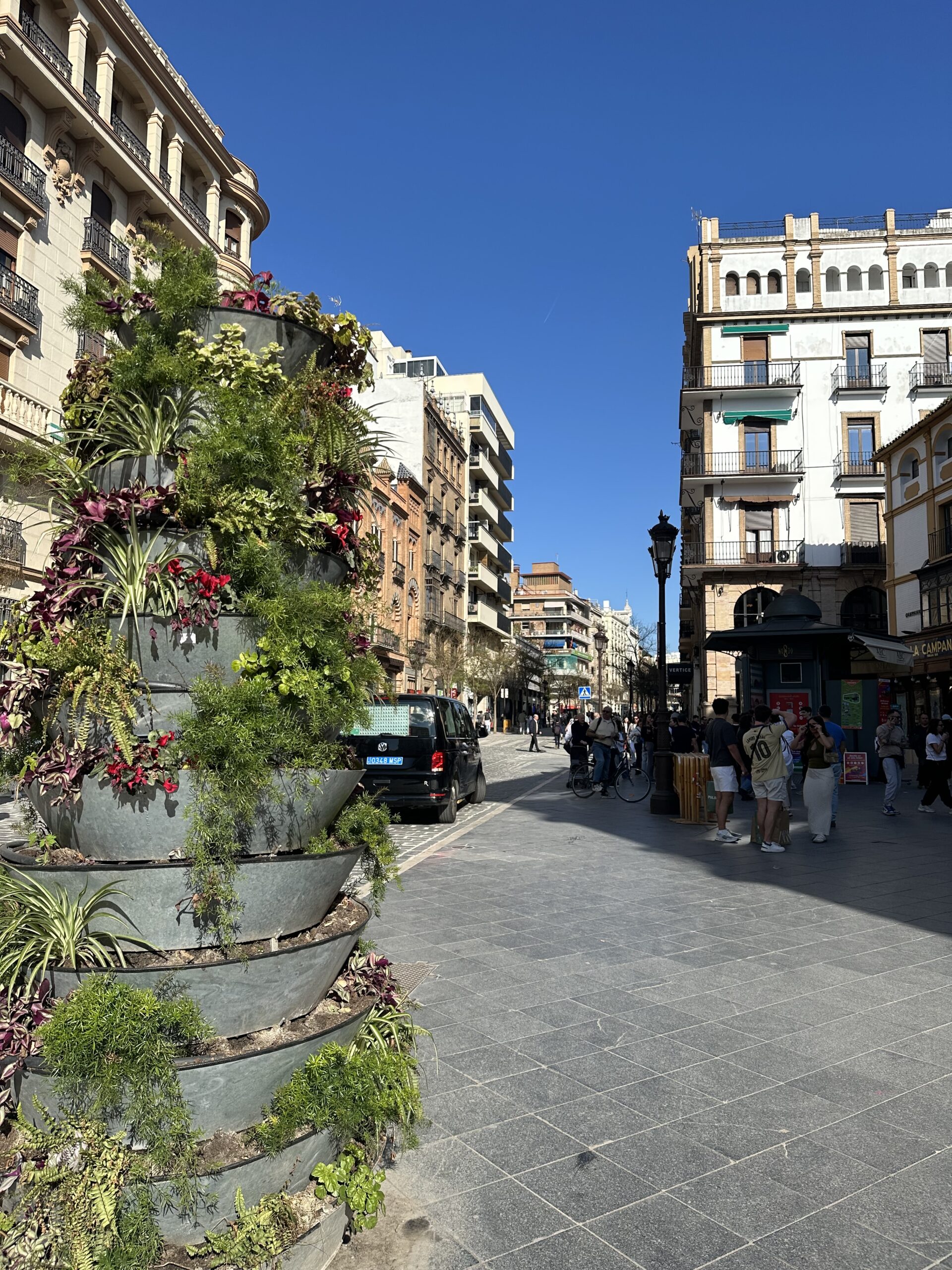
A City Full of Contrasts
Seville is one of Spain’s most popular cities. Every year, millions of tourists flock to
the city to experience its famous landmarks, delicious food, and authentic Spanish
atmosphere. Especially in the summer and during events like Holy Week and the
April Fair, the city is absolutely packed with visitors. For tourists, Seville often feels
like a lively vacation destination with sun, tapas, and flamenco. But for the locals,
Seville is simply the place where they live, work, and study. As a result, there is
sometimes a big difference between how tourists see the city and how residents
experience daily life.
How Tourists Experience Seville
Many tourists come to Seville for the city’s famous landmarks. Sites such as the Real
Alcázar, the cathedral, and Plaza de España are always bustling with visitors.
Tourists take photos, take guided tours of the city, and often seek out the most
famous restaurants and bars. As a result, many visitors tend to stay mainly in the city
center.
For tourists, Seville is often all about relaxation and culture. They want to eat tapas,
attend flamenco shows, and enjoy the Spanish way of life. It’s particularly noticeable
that tourists often have a different rhythm than locals. Many visitors eat early, walk
around all day in the heat, and pack their days full of activities. In Spain, the pace isactually slower, especially because of the heat. Locals take their time eating and
often rest during the hottest hours of the day.
In addition, tourists usually only see the beautiful side of the city. They stay in hotels
or apartments in the city center and experience Seville as a place full of conviviality
and atmosphere. They often notice problems such as high rent prices or crowds in
residential neighborhoods less.
Life for Locals in Seville
For residents of Seville, tourism can be a positive thing, but it can also be frustrating.
Many locals earn a living from tourism. Restaurants, hotels, and shops generate
significant revenue from visitors from other countries. Young people, in particular,
find work in the hospitality or tourism sectors. Tourism is therefore very important to
the city’s economy.
At the same time, mass tourism also brings problems. In the center of Seville, more
and more homes are being rented out to tourists through platforms like Airbnb. This
drives up rent prices and makes it harder for locals to find affordable housing. Some
residents feel that the city center is becoming less of a residential area and more of a
place for tourists.
The crowds also play a major role. During peak periods, squares, restaurants, and
streets are completely packed. As a result, locals sometimes avoid certain parts of
the city. While tourists find the bustle lively and enjoyable, residents sometimes find
it exhausting.
In addition, some locals feel that tourists do not always adapt to Spanish culture. For
example, by being loud at night or by showing little respect for local customs. Seville
has a strong culture of its own, and many residents are proud of their traditions. As a
result, there can be friction when visitors behave solely as vacationers without taking
the city and its residents into account.
Differences in Culture and Lifestyle
A major difference between tourists and locals lies in the way they experience the
city. Tourists want to see as much as possible in a short amount of time. Locals live
a much more relaxed life and use the city in a practical way. While tourists spend
hours sitting on terraces at the most famous spots, locals tend to head to quieter
neighborhoods outside the city center.
Eating habits also differ greatly. Tourists often eat around six in the evening, while
locals usually don’t dine until late. In Seville, nightlife often doesn’t really get going
until around ten o’clock. This can feel strange to visitors, but for residents, it’s
normal.
Furthermore, tourists often view Seville through a romantic lens. They see flamenco,
colorful buildings, and sunny squares. Locals have a more realistic view of the city.They know that Seville isn’t just beautiful and lively, but can also be very hot in the
summer, and that daily life simply carries on with school, work, and responsibilities.
Can tourism and local life coexist?
Tourism is part of Seville’s identity and will likely always remain important. Without
tourists, the city would suffer significant economic losses. Nevertheless, it is
important to maintain a healthy balance between visitors and residents. The city is
therefore working to establish more regulations regarding tourist apartments and
crowds in the city center.
Tourists themselves can also contribute to a better atmosphere. By showing respect
for the culture, visiting local restaurants, and being considerate of residents, greater
understanding develops between both groups. After all, Seville is not only a vacation
destination but also a home for thousands of people.
Final Thoughts
The difference between tourists and locals in Seville is clearly visible. Tourists
primarily experience the city as a place for relaxation, culture, and vacation. Locals
see Seville as their everyday living environment. Tourism generates significant
revenue and a lively atmosphere, but it also brings problems such as crowds and
rising rent prices.
Yet it is precisely these differences that make Seville interesting. The mix of visitors
and residents creates a lively atmosphere that is typical of the city. As long as there
is respect for the local culture and residents, tourists and locals can coexist
harmoniously in this unique Spanish city.
Would you like to explore this culturally rich city in a fun way? Then book our daily
highlight tour by bike! If you have any other questions, we’d be happy to answer
them. Whether online or in our store, we’re here to help!
Adres: Calle Alcalde Isacio Contreras, 1, Sevilla
Website: www.atdspain.com
Instagram: @ATD.spain
TikTok: @ATD.spain
Facebook: Andalucia Tours and Discovery

