
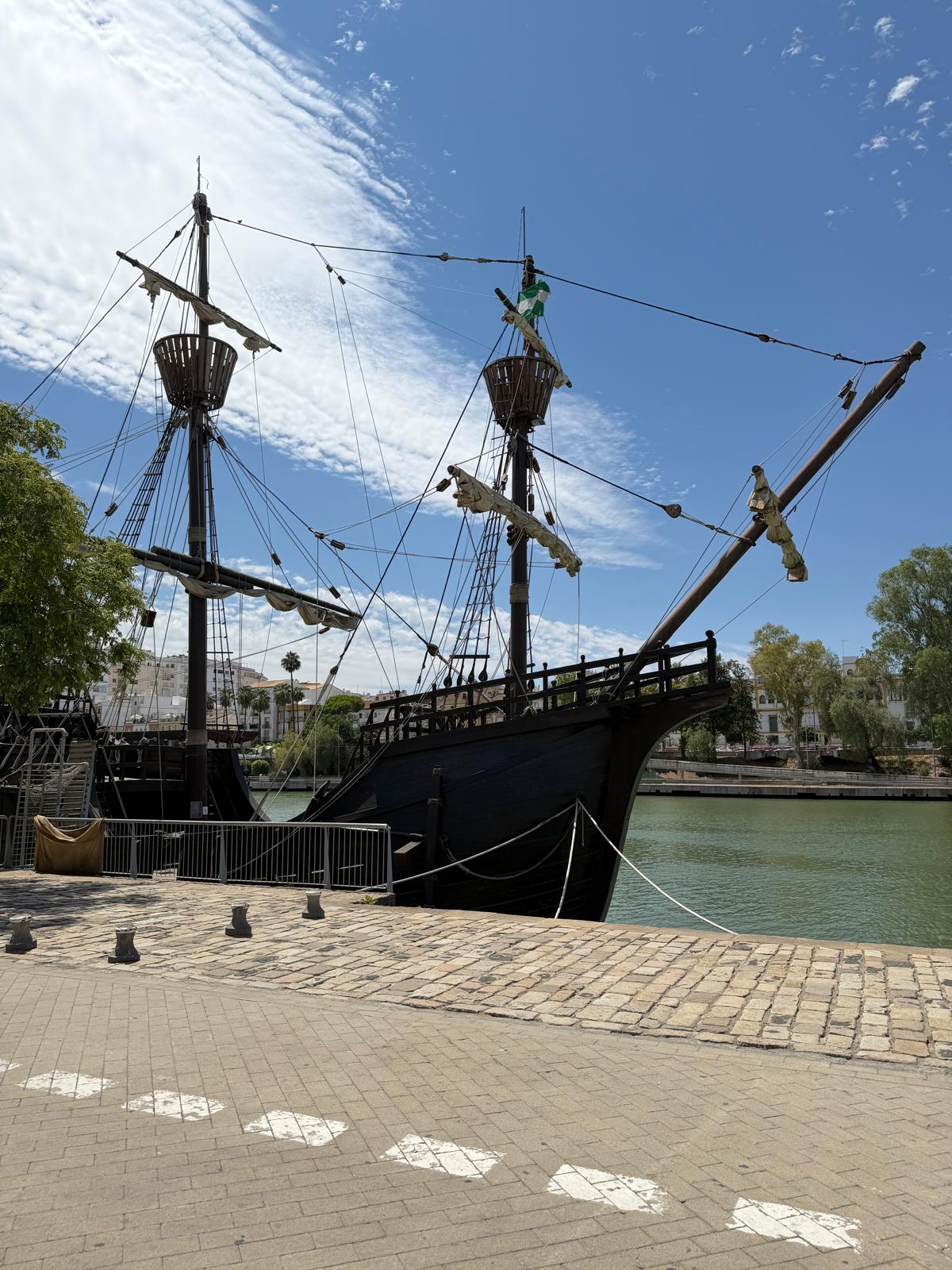
Walking through the streets of Seville today, you will see impressive palaces, large squares and beautiful historic buildings. But did you know that Seville was once one of the richest cities in the world? After the discovery of America in 1492, the city grew into the economic heart of Spain. Gold, silver and other precious goods from America all entered Europe via Seville. This period brought enormous wealth and changed the city forever. In this blog you can read how Seville became so rich, what influence this had on the city and why you can still see this history today.
The discovery of America
In 1492 Christopher Columbus left Spain on his famous journey across the Atlantic. Although he thought he had found a new route to Asia, he discovered America. This discovery marked the beginning of a new era in which Spain became one of the most powerful countries in the world.
The Spanish crown decided that all trade with America should go through one city. That city became Seville. Thanks to its convenient location on the River Guadalquivir, merchant ships were able to reach the city. As a result, Seville quickly became the most important trading center of the Spanish empire.
Gold, silver and precious goods
Ships from America arrived full of valuable products from the sixteenth century. The best known are natural gold and silver, but cocoa, sugar, tobacco, spices and exotic plants also found their way to Europe via Seville.
The enormous amounts of precious metal made Spain incredibly rich. Traders, bankers and merchants settled en masse in Seville to take advantage of the thriving economy. The city attracted people from all over Europe who were looking for trade, work and new opportunities.
The Casa de la Contratación was established in Seville to organize the trade well. This institution supervised all ships, goods and maps of the Spanish voyages of discovery. This gave Seville a monopoly on trade with the Spanish territories in America for years.
A city full of wealth
Seville’s wealth was visible everywhere. Impressive churches, monasteries, palaces and mansions were built. Artists, architects and craftsmen also went to the city, making Seville an important cultural center.
Many buildings that you can admire today are from this heyday. Think of the imposing cathedral, the Giralda and the Royal Palace (Real Alcázar), which were further expanded and decorated thanks to prosperity. The narrow streets of the Santa Cruz district also recall the time when wealthy traders and influential families lived here.
In the sixteenth century, Seville became one of the largest cities in Europe. The city had more than 100,000 inhabitants and was the beating heart of trade between Europe and America.
Why did Seville lose its wealth?
This flowering period eventually came to an end. By silting up the river Guadalquivir it became increasingly difficult for large ships to reach Seville. In addition, Spain faced wars, economic problems and epidemics, causing trade to decline.
In 1717, the commercial monopoly was moved to the port city of Cádiz. Seville lost its position as Spain’s most important trading city. Nevertheless, the city retained its rich heritage. The impressive buildings, squares and historic neighborhoods still remind us of the time when Seville was one of the richest cities in the world.
Discover the rich history during our cycling tour
During our bike tour we take you along these historic places and tell our guides how trade with America turned Seville into one of the most important and richest cities in Europe. This way you will not only discover the most famous sights, but you will also get a unique glimpse into the story behind the city. History only really comes to life when you see the places with your own eyes.
If you have any questions, we are happy to answer them. Whether online or in our store, we are ready to help you!
Adres: Calle Alcalde Isacio Contreras, 1, Sevilla
Website: www.atdspain.com
Instagram: @ATD.spain
TikTok: @ATD.spain
Facebook: Andalucia Tours and Discovery

